English

Views: 0 Author: Site Editor Publish Time: 2026-07-15 Origin: Site


Prolonged standing during daily food prep or dishwashing often leads to lower back strain, severe foot fatigue, and lingering joint discomfort. We routinely ignore these physical tolls until the pain becomes unbearable. However, standard decorative rugs rarely solve this issue. They usually create hidden slipping and tripping hazards in high-traffic, spill-prone environments. Grease, water drops, and food scraps quickly turn standard fabric rugs into a safety risk on hard floors. You need to transition from aesthetic-only rugs to purpose-built, ergonomic floor solutions. Doing so protects your body without compromising on your overall home design. In this guide, you will learn exactly how to identify your core support needs and evaluate different manufacturing materials. We will also explore crucial safety standards, cleaning realities, and sizing guidelines. This knowledge ensures your final choice serves your space perfectly.
Material dictates performance: Choose high-density polyurethane or gel for anti-fatigue support; opt for low-pile synthetics for machine-washable convenience.
Safety requires specific engineering: Non-slip backing and beveled edges are non-negotiable features to prevent tripping and sliding on hard surfaces.
Maintenance realities vary: Solid-surface mats wipe clean daily but may stain; woven options require laundering but handle dry debris better.
Placement determines size: The ideal mat size depends directly on your kitchen’s functional zones (e.g., sink width, prep island length).
You must evaluate your actual daily habits before making a purchase. Many shoppers simply buy the first attractive option they see. This approach often leads to premature wear or inadequate physical support. You should break down your needs into three distinct categories: comfort, safety, and maintenance.
Buyers often confuse "softness" and "support." Softness feels plush initially. However, your feet will quickly bottom out and hit the hard floor beneath. This zero-resistance sinking increases joint compression. True ergonomic support requires high-density rebound capabilities. A high-density core pushes back against your weight. It encourages subtle micro-movements in your leg muscles. These micro-movements promote blood flow and reduce vascular pooling. If you spend hours chopping vegetables, you need this active rebound support.
Kitchens handle water, oil, and dry powder spills daily. You must assess the friction coefficient of your flooring when wet or greasy. High-gloss tiles become extremely slick. Smooth hardwoods offer slightly more grip but easily show moisture damage. Your mat must grip the floor securely regardless of surface moisture. Look for engineered grip patterns designed for your specific flooring. Do not assume a simple rubber spray layer will hold under heavy foot traffic.
Defining success criteria depends entirely on your household traffic. You must balance the need for daily spot-cleaning against periodic deep sanitation. Think about your daily routine.
Do you have shedding pets?
Do toddlers frequently drop sticky food?
Do you fry foods often, creating airborne grease?
Answering these questions clarifies your cleaning priorities. If you fry foods daily, a wipe-clean surface saves hours of labor. If you deal mostly with dry crumbs, fabric textures might suffice.
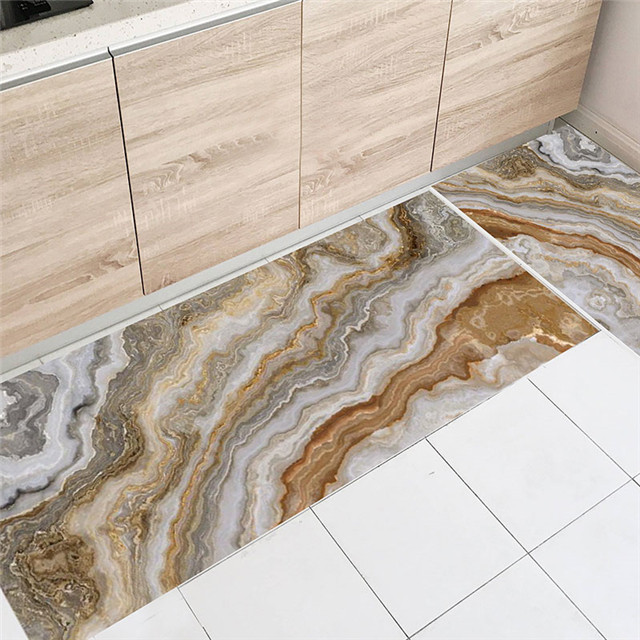
The core material defines how your mat performs over years of use. Industry experts categorize options based on interior composition and exterior durability. Finding the right Kitchen Mat means aligning these material traits with your specific physical needs.
Polyurethane foam dominates the premium anti-fatigue market. Manufacturers engineer this material to provide sustained resistance. It does not compress fully under adult body weight.
Pros: It offers exceptional rebound. The material is highly durable. It resists bottoming out even after years of daily use.
Cons: These mats can be quite heavy. They offer limited decorative patterns compared to textiles.
Best for: Serious home chefs. If you spend two or more hours standing daily, this material prevents spinal compression.
Gel cores operate differently than foam. Gel displaces under pressure to contour directly around your feet. This creates a customized impression while you stand still.
Pros: It contours directly to your feet. Gel provides excellent shock absorption for sensitive arches.
Cons: Gel is prone to puncturing. A dropped chef’s knife can cause permanent leaks. They are also often more expensive.
Best for: Users prioritizing maximum therapeutic cushioning. If you suffer from plantar fasciitis or existing joint pain, gel offers superior relief.
Not everyone needs clinical-grade ergonomic support. Many homeowners prefer Machine Washable Kitchen Carpets for their aesthetic versatility and easy sanitation.
Pros: They are aesthetically versatile. You can easily sanitize them in standard home appliances. They handle pet hair exceptionally well.
Cons: They offer zero anti-fatigue properties. You must pair them with a specialized under-pad for any comfort.
Best for: Messy households and pet owners. They fit perfectly in design-first spaces where hygiene outweighs ergonomic support.
Material Type | Primary Benefit | Major Drawback | Ideal Household |
|---|---|---|---|
Polyurethane Foam | Long-lasting rebound | Heavy, basic designs | Heavy cooking, long standing |
Gel-Filled | Custom contouring | Puncture risk | Users with existing foot pain |
Woven Synthetic | Easy machine washing | No built-in cushion | High mess, pet owners |
Safety engineering separates premium floor solutions from cheap alternatives. A poorly designed mat introduces new dangers into your workspace. You must examine edge construction, backing materials, and surface textures closely.
Edge curling causes thousands of household falls annually. High-quality mats utilize a 20-degree beveled edge. This slope allows sweeping foot movements without catching your toes. It serves as an industry standard for occupational safety. Avoid lightweight, cheap foams. These lower-tier foams retain "roll memory." They will permanently curl upwards after you unroll them from the packaging.
A sliding mat is useless and dangerous. You must evaluate the backing material against your specific floor type. Textured rubber generally provides excellent grip on ceramic tile. However, you must exercise caution regarding chemical reactions. Some synthetic rubber backings contain plasticizers. These chemicals can migrate into treated hardwood or luxury vinyl floors. This migration causes permanent yellowing or discoloration.
Always check manufacturer labels for "hardwood safe" guarantees.
Clean the floor thoroughly before initial placement.
Lift the mat weekly to let the floor breathe.
You must balance slip resistance against cleaning difficulty. A deeply grooved top layer provides excellent traction. However, deep grooves trap stubborn food particles and flour. Look for a lightly pebbled or brushed texture. This provides sufficient grip for wet shoes without creating dirt traps.
Your maintenance routine dictates how long your purchase will last. You must align your material choice with your willingness to clean it. Kitchen environments subject floors to harsh acidic spills and heavy oils.
Polyurethane and gel options feature solid top surfaces. You will encounter oil splatters, dropped sauces, and spilled wine. Closed-cell construction is vital here. A closed-cell surface prevents moisture and odor absorption entirely. You can simply wipe away a dropped jar of pasta sauce with a damp cloth. However, lighter colors may suffer from dye transfer. Tomato paste or turmeric can permanently stain a white foam surface if left uncleaned for hours.
Woven textiles offer completely different cleaning dynamics. You should specifically seek out synthetic fibers if you prefer laundering. Standard cotton absorbs grease permanently. Synthetic fibers release stains during a hot wash cycle. You must also consider your washing machine capacity. Commercial machines are often necessary for oversized runner mats. Stuffing a large, heavy runner into a small home washer will damage both the fabric and the appliance.
Cleaning frequency degrades different materials in unique ways. Harsh chemical sprays will eventually break down foam memory. Bleach or heavy degreasers cause polyurethane to turn brittle and crack. Conversely, frequent laundering physically degrades carpet fibers. Hot water cycles weaken backing adhesives over time. Expect synthetic woven options to fray at the edges after roughly fifty wash cycles. Polyurethane can last over five years if you clean it gently with mild dish soap.
Selecting the correct dimensions prevents awkward visual gaps. It also ensures you actually step on the supportive surface during your tasks. Standard sizing logic relies on understanding your functional kitchen zones.
The kitchen sink remains the most stationary prep zone. A standard 20"x32" size usually fits perfectly centered in front of a double sink. Kitchen islands or galley layouts require different geometry. You usually pace back and forth along an island. In these zones, you need runners measuring 20"x60" or longer. Buying a small square for a long island forces you to constantly step on and off the elevated edge.
Floor coverings carry significant visual weight in room design. Lighter colors brighten small spaces but highlight every single dropped crumb. You should use darker colors or heavily patterned designs in high-traffic zones. Complex geometric or floral patterns excel at masking minor, inevitable staining between deep cleans.
Do not forget the vertical dimension. Premium anti-fatigue options often measure three-quarters of an inch thick. You must measure the gap between your floor and the bottom of your cabinet doors. Check the clearance under lower drawer pulls. Check the sweep of your pantry door. A thick pad is useless if it blocks your lower oven drawer from opening smoothly.
You can streamline your buying process by following a rigid framework. This eliminates decision fatigue and focuses on functional priorities.
Identify primary user pain point: Decide if your main issue is physical fatigue, messy spills, or aesthetic design.
Match pain point to material: Select high-density foam or gel for joint fatigue. Choose washable synthetics for managing heavy household messes.
Verify safety constraints: Ensure the product features beveled edges. Confirm the non-slip backing is chemically safe for your specific floor type.
Measure clearance and footprint zone: Tape out the dimensions on your floor. Open all lower cabinets to confirm clearance before finalizing the purchase.
By following these structured steps, you eliminate guesswork. You will secure a product that enhances both your physical comfort and your daily workflow.
Choosing the right floor solution requires balancing ergonomics, safety, and daily hygiene. You must evaluate how your body feels after cooking and how much time you dedicate to cleaning. Thick polyurethane models deliver vital joint relief for serious cooks. Washable synthetic runners keep chaotic, pet-friendly households looking pristine. Always prioritize safety features like beveled edges and floor-safe backing materials to prevent accidents. Ultimately, the best choice directly addresses the specific friction points of your daily routine. Take five minutes to measure your primary prep zone and check your door clearances before clicking purchase.
A: The optimal thickness is usually ¾ inch. You should emphasize material density over mere thickness. A dense ¾-inch foam provides better support and bottom-out resistance than a cheaper, softer 1-inch foam.
A: Yes, they are generally safe. However, you must ensure the backing is non-abrasive. It must also be entirely free of plasticizers. Plasticizers found in cheap rubber can cause permanent chemical staining on treated wood.
A: You should replace it every 1 to 3 years depending on household foot traffic. You must replace it immediately if the edges begin to curl upwards, as this creates a severe tripping hazard.
A: You can use a regular rug only if it is equipped with a heavy-duty rug pad. This prevents slipping. Keep in mind it will completely lack spill resistance and ergonomic support.