
- All
- Product Name
- Product Keyword
- Product Model
- Product Summary
- Product Description
- Multi Field Search
 English
Views: 0 Author: Site Editor Publish Time: 2026-07-15 Origin: Site


Every day, thousands of people experience sudden slips or lingering back pain simply because they stand on the wrong surface while cooking or doing laundry. Standard textile rugs fail completely in high-traffic utility zones. They quickly accumulate water, absorb tough grease stains, and lack the basic ergonomic support human bodies require. The stakes in these active areas are surprisingly high. Slips, unexpected trips, and lower-back fatigue stand out as the primary health risks in modern kitchens and laundry rooms. Choosing the wrong material creates genuine physical hazards rather than actually solving them. Our objective here is to establish an objective, evidence-based framework for evaluating utility floor mats. We will examine these products based on reliable traction, proactive trip prevention, and long-term material resilience. You will learn exactly how to navigate industry terminology, spot inferior products, and secure a safe environment for your most demanding household chores.
A truly safe kitchen mat requires a dual-surface grip: a high-friction underside for the floor and a textured top for wet footwear or socks.
Material density matters more than sheer thickness; overly thick, low-density foam creates severe tripping hazards.
Zone-specific hazards dictate material choice: sinks require a 100% waterproof barrier, while stoves require grease and heat resistance.
Beveled edges (tapered to the floor) are a non-negotiable safety feature to prevent edge-curling over time.
A beautiful design means nothing if the floor accessory causes an accident. We must establish a strict safety baseline before discussing comfort or aesthetics. Evaluating utility mats requires a focus on physics, friction, and structural integrity.
Many buyers ignore edge design entirely. They focus solely on cushioning. This oversight leads to dangerous household accidents. You must evaluate the edge transition carefully. The industry standard requires a 20-degree beveled slope. This gradual taper connects the highest part of the mat safely to the floor. A steep drop-off creates an immediate tripping hazard. Accidental toe-catches happen when edges sit too high. A proper bevel ensures your foot slides over the boundary smoothly. It also allows rolling carts or vacuums to pass without snagging.
You cannot compromise on floor adhesion. The mechanics of backing materials determine everything. Cheap textile rugs often use scattered PVC dots. These dots break down quickly. They offer terrible grip on smooth surfaces like hardwood, tile, or luxury vinyl plank. Natural rubber provides vastly superior friction. Specialized textured polyurethane also excels at gripping smooth floors. These advanced materials create a microscopic vacuum effect. They prevent the mat from "skating" under sudden movements. A shifting surface creates an unpredictable walking environment. You must insist on a continuous, high-friction underside.
Lightweight foam alternatives often appeal to budget shoppers. They feel easy to move around. However, lack of mass compromises safety. A heavier, denser mat stays firmly anchored during rapid movement. When you pivot quickly from the sink to the stove, you generate significant lateral force. A lightweight foam pad will easily slide out from under you. Dense materials absorb this energy. They maintain their position flawlessly. You should consider weight a primary indicator of both stability and manufacturing quality.
Best Practice: Always test a mat by applying lateral foot pressure before keeping it. It should not budge.
Common Mistake: Buying a mat based purely on color while ignoring the underside grip material.
Utility spaces present vastly different environmental challenges. You cannot use a universal approach for every room. Each zone introduces specific chemicals, temperatures, and physical risks. You must match the material properties to the localized threat.
The area below your sink endures constant water splashing. Dropped ice cubes melt into puddles. Dishwashing creates soapy runoff. This environment demands a continuous, non-porous surface. You must avoid stitched seams at all costs. Stitches act as tiny gutters. They channel dirty water into the core. Mold and mildew breed rapidly inside damp foam. A solid polyurethane surface rejects water completely. You just wipe it away quickly. A seamless design keeps the interior core perfectly dry over years of heavy use.
Your stove area acts as a heavy-duty workshop. The floor here faces hot oil splatters daily. You might occasionally drop a heavy pan or a sharp knife. Vulnerability to heat and punctures ruins cheap materials. You must assess surface durability stringently here. Look for high stain resistance. Tomato sauce and hot grease leave permanent marks on porous rugs. You need a surface you can degrease easily. Harsh cleaning should never degrade the structural integrity. Polyurethane resists most kitchen chemicals flawlessly.
Laundry rooms involve sustained standing during folding and sorting. You also face exposure to powerful detergents and bleach. Furthermore, washing machines generate intense floor vibrations. You need chemical-resistant top layers. A stray splash of bleach will instantly ruin fabric options. The core must also offer vibration-dampening properties. Standing next to a spinning washer sends micro-shocks up your legs. A dense foam core absorbs these mechanical tremors effectively.
Utility Zone | Primary Hazard | Critical Material Requirement |
|---|---|---|
The Sink | Standing water, soap spills | 100% non-porous, seamless surface |
The Stove | Hot grease, dropped utensils | Puncture resistance, easy degreasing |
Laundry Room | Chemical spills, vibration | Bleach resistance, dense core damping |
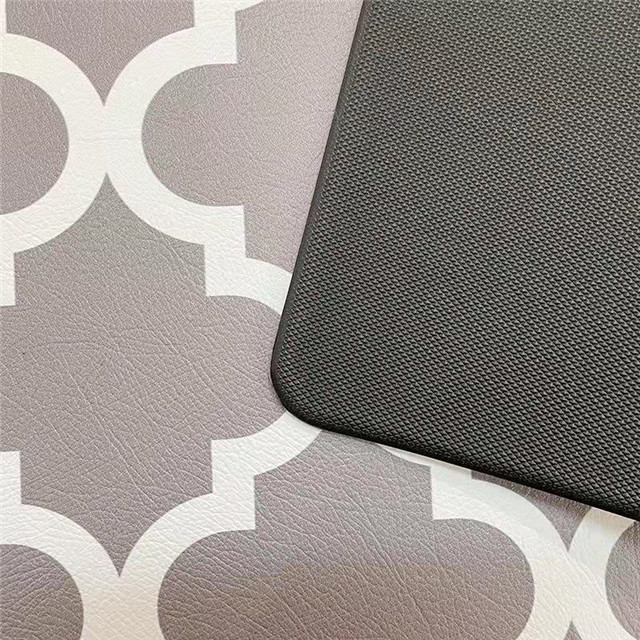
Marketing departments often confuse buyers intentionally. They invent fancy names for basic plastics. You must understand fundamental material science to make an informed choice. Finding a genuine Waterproof Kitchen Floor Mat requires looking closely at the chemical composition.
You will encounter two main plastics in the utility market. They behave very differently over time.
PVC (Polyvinyl Chloride): Manufacturers love PVC. It costs very little to produce. However, it often suffers from severe off-gassing. This chemical smell lingers in your home for weeks. PVC also hardens over time. It becomes prone to edge curling and eventual cracking.
High-Density Polyurethane: This material demands a higher upfront cost. The investment pays off immediately. Polyurethane maintains its structural integrity for years. It strongly resists punctures from dropped forks or knives. Most importantly, it offers a fully impenetrable waterproof barrier.
Foam structure dictates longevity. Open-cell foam resembles a standard dish sponge. The internal pockets connect to one another. Closed-cell foam resembles bubble wrap. Each microscopic pocket remains sealed off independently. Closed-cell construction is strictly mandatory for kitchens. Open-cell foam inevitably absorbs spills. Liquid seeps through microscopic top-layer tears. This leads directly to internal rot and sour odors. Closed-cell material repels liquids entirely. Even if you scratch the surface, water cannot penetrate the deeper layers.
You must assess the "wipeability" factor before buying. Deep physical textures look interesting visually. However, they trap dirt and grime mercilessly. Flour, dust, and pet hair get wedged into deep faux-wood grooves. Ideal surfaces balance micro-texture with macro-smoothness. You need enough micro-texture for safe grip. Simultaneously, the overall surface must remain smooth enough for easy sweeping and mopping. You should never need a scrub brush to clean up a simple spill.
Ergonomics is an exact science. It goes far beyond simply making a surface feel soft. Prolonged standing forces your heart to work harder. It also compresses spinal discs. A proper Comfortable Anti Slip Kitchen Floor Mat addresses biomechanical stress actively.
Consumers consistently believe thicker equals better. This assumption causes significant physical harm. Soft, overly thick mats behave like marshy ground. Your heels sink deeply into the material. The mat completely bottoms out under pressure. This dynamic forces your ankles to constantly adjust. Ankle instability triggers a chain reaction up your legs. Your calves tighten. Your knees lock. Consequently, overall body fatigue increases drastically. You want supportive buoyancy, not quicksand.
Compression resistance serves as the standard metric for anti-fatigue products. Industry ergonomic guidelines demand a specific balance. A high-quality product should compress slightly under your body weight. This initial give relieves acute joint pressure immediately. However, the foam must possess strong rebound characteristics. It should push back against your feet. Furthermore, it must rebound instantly when you step off. Inferior memory foam leaves permanent foot indentations. True ergonomic support requires active material resilience.
You must balance a supportive core with an aggressive top coat. A mat serves no purpose if it becomes an ice rink when wet. Superior products feature engineered surface tension. The top layer grips your shoes securely. It performs reliably even when lightly dusted with baking flour. It maintains traction when splashed with soapy dishwater. You need multi-condition grip. The texture must cut through liquid to maintain contact with your footwear.
Best Practice: Look for a thickness between 5/8-inch and 3/4-inch. This range provides optimal joint relief without creating a stumbling hazard.
Common Mistake: Buying ultra-plush mats intended for bathrooms and placing them in heavy-duty cooking areas.
The home goods market features thousands of cheap imports. Many of them masquerade as premium products. You must learn to spot structural red flags immediately. Knowing what to avoid is crucial. Your goal is to secure a reliable Kitchen Mat that lasts a decade, not just a season.
Inexpensive memory foam mats look great on day one. Unfortunately, they almost always fail rapidly. They lack dimensional stability. Temperature fluctuations cause the cheap foam layers to contract unevenly. This tension makes the edges curl upward after just three to six months. A curled edge instantly becomes a severe liability. It transforms a comfort device into a dangerous tripwire. You cannot flatten a curled mat once the internal plastic deforms. You must throw it away entirely.
Many consumers ruin expensive flooring by choosing the wrong backing. Cheap rubberized backings often undergo plasticizer migration. The chemicals in the cheap mat react with your floor finish. This reaction causes permanent yellowing or dark discoloration. Luxury vinyl plank (LVP) and engineered hardwood are especially vulnerable. You must verify floor compatibility. High-quality polyurethane backings generally remain inert. They will not interact chemically with modern floor sealants.
Ignore fluffy advertising adjectives completely. Terms like "medical-grade," "cloud-like," or "therapeutic" carry zero legal weight. They exist only to justify higher prices for mediocre foam. You must look past the emotional marketing. Focus entirely on verifiable specifications. Check the warranty length specifically against "bottoming out" or edge curling. Review the exact material composition. Confirm the overall product weight. Real quality hides in the technical data, not the catchy slogans.
Creating a safe, comfortable workspace at home requires attention to detail. A poorly chosen rug introduces unnecessary danger into your daily routine. By applying strict evaluation criteria, you protect both your flooring and your physical health.
Verify beveled edges: Ensure a 20-degree taper exists to prevent accidental tripping.
Confirm high-density closed-cell material: Reject anything that absorbs liquid or permanently dents under pressure.
Match the surface texture: Choose a smooth, wipeable finish for high-spill zones and a durable, puncture-resistant finish for high-impact areas.
Grab a tape measure before making any purchases. You must measure your specific utility zone carefully. Note your total sink width and your primary stove span. You want to ensure your shortlisted option provides adequate standing coverage. However, the edges should never overlap your appliances or fold awkwardly into baseboard corners. Proper sizing guarantees the material lays perfectly flat from day one.
A: Cheap rubber often causes discoloration due to plasticizer migration. Chemical compounds leach from the backing and react with your floor sealant, causing permanent yellowing. Always check your specific flooring manufacturer guidelines. High-density polyurethane backings are generally inert and safe for luxury vinyl plank and sealed hardwoods.
A: Use a damp cloth paired with a mild, pH-neutral cleaner. Avoid bleach, harsh degreasers, and stiff abrasive brushes. Scrubbing aggressively will slowly destroy the micro-texture needed for slip resistance. A quick daily wipe prevents sticky grime buildup entirely.
A: The optimal sweet spot lies between 5/8-inch and 3/4-inch thick. This specific range provides necessary compression to relieve joint pressure without causing ankle instability. Anything thicker typically creates an unacceptable trip hazard and causes premature leg fatigue.
A: No. True high-density anti-fatigue mats are wipe-clean only. The spinning forces inside a washing machine will destroy their internal closed-cell structure. Machine-washable rugs are merely textiles; they lack the robust structural support required to reduce standing fatigue.