
- All
- Product Name
- Product Keyword
- Product Model
- Product Summary
- Product Description
- Multi Field Search
 English


Floor degradation, increased maintenance costs, and slip-and-fall hazards begin at the threshold. A compromised entrance system fails its primary function the moment foot traffic crosses the frame. Relying on a single, degraded, or improperly sized door mat leads to moisture tracking, abrasive damage to interior flooring, and continuous cleaning requirements. Every step taken past an inadequate entry barrier grinds fine silica and dirt into hardwood finishes or luxury vinyl planks, accelerating surface wear and destroying the finish.
You must transition from viewing entrance mats as purely decorative welcome mats to evaluating them as functional, multi-stage barrier systems designed to trap debris and manage moisture. A properly engineered threshold intercepts contaminants before they enter the living or working space, drastically reducing interior maintenance. This guide breaks down the technical requirements for selecting, sizing, and deploying entrance protection systems that actually work in real-world conditions.
The Dual-Zone Requirement: Effective entrance protection requires a two-part system: an exterior scraper mat for heavy debris and an interior absorbent mat for moisture control.
Multi-Entrance Protocol: To successfully protect interior flooring, a dedicated door mat must be deployed at every entry point, including secondary exterior doors, garage transitions, and patio exits.
Sizing Standards: A functional door mat must be at least 80% of the doorway's width to prevent bypass tracking, while avoiding excessive widths that crowd the entry frame.
Material Specificity: Material selection must align with environmental exposure; organic fibers degrade in constant moisture, whereas synthetic rubbers and polypropylenes offer superior weather and UV resistance.
Replacement Indicators: Loss of pile height, backing degradation, and edge curling are primary indicators that a mat is actively creating safety risks rather than mitigating them.
Protecting only the primary front entrance is a massive failure point in building maintenance. Tracking occurs equally through secondary access points, which often see higher daily use than the formal front door. A comprehensive barrier strategy requires evaluating every exterior transition point to stop dirt at its source. If you leave the back door unprotected, the front door system becomes irrelevant.
Different entrances expose interiors to distinct types of contaminants. Identifying these specific risks dictates the type of protection required at each threshold. You cannot use the same mat profile for a garage that you use for a front porch.
Garage-to-Kitchen transitions: These areas carry a high risk of automotive fluids, heavy oils, and industrial grit tracking onto residential floors. The debris here is abrasive and chemically aggressive, requiring mats that resist oil degradation.
Patio and Back Deck exits: These transitions face elevated exposure to moisture, grass clippings, and garden soil. Organic matter tracked from these areas quickly stains interior carpets and grout lines.
Service doors and mudrooms: These entrances handle a concentration of high-volume wet debris and pet traffic. They require maximum moisture retention capabilities and heavy scraping action.
Matching the mat's aesthetic profile and functional capacity to the specific utility of the door ensures optimal performance. A highly aesthetic but functional mat suits the main foyer, where visual appeal matters. Conversely, utility-grade mats are mandatory for garage transitions where trapping heavy grease and grit takes priority over design. Tailoring the barrier to the specific traffic type prevents premature mat failure and floor damage.
Entrance Type | Primary Contaminant | Recommended Mat Profile | Priority Feature |
|---|---|---|---|
Main Foyer | Dust, light moisture, street dirt | Dual-zone (scraper outside, absorber inside) | Aesthetic integration, high absorption |
Garage Transition | Oil, grease, heavy silica grit | Nitrile rubber scraper, dark color | Chemical resistance, aggressive scraping |
Patio / Deck | Mud, grass clippings, organic soil | Deep-channel rubber or heavy polypropylene | Easy washability, UV resistance |
Mudroom | Snow, heavy rain, pet debris | Water-dam border mats, heavy pile | Maximum moisture retention capacity |
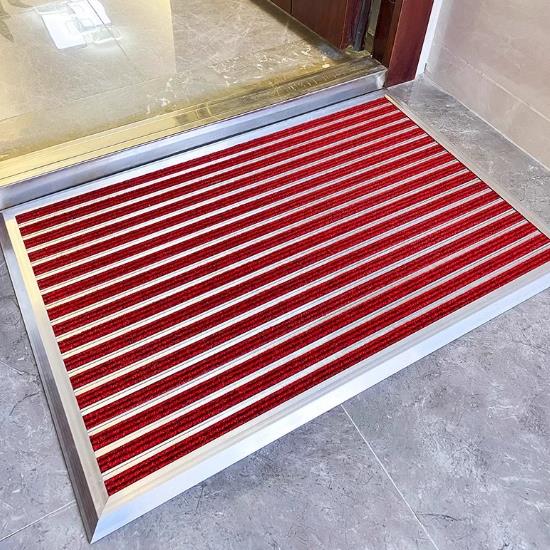
Establish the baseline function of an entrance mat: reducing tracked soil by up to 80% within the first few steps. If a mat simply pushes dirt around or becomes instantly saturated, it is failing. Effectiveness is measured by how much debris is physically removed from footwear and contained within the mat's structure until cleaning.
A single mat rarely accomplishes both scraping and absorbing effectively. The industry standard relies on a dual-zone approach to handle different types of debris.
Zone 1 (Exterior): The primary barrier. Focus on aggressive scraping action to dislodge mud, snow, and large particulate matter. These mats must feature rigid textures and open structures to let water drain away from the walking surface.
Zone 2 (Interior): The secondary barrier. Focus on capillary action to absorb residual moisture, trap fine dust, and provide non-slip safety. These mats dry the soles of shoes to prevent slip hazards on hard interior floors.
Evaluate mats based on measurable performance indicators. Moisture retention capacity, often measured in ounces per square yard, determines how much rain or snow the mat can hold before leaking onto the floor. Crush resistance over time dictates how long the mat will maintain its scraping and trapping abilities under repetitive foot traffic. A flattened mat offers zero functional utility and simply acts as a ramp for dirt to enter the building.
Choosing the right materials separates disposable mats from truly Durable Door Mats. Material science dictates how well a mat withstands environmental stress, UV exposure, and physical abrasion. You need to match the material to the specific environmental load it will face.
Exterior environments demand materials that will not rot, fade, or freeze solid during winter months.
Coir (Coconut Husk): Coir offers high scraping efficacy but is highly susceptible to shedding, moisture retention, and UV rot. It is best restricted to covered, low-moisture porches where it will not remain perpetually wet.
Molded Rubber & Nitrile: These materials are impervious to water, offer high UV resistance, and maintain structural stability in freezing temperatures. Rubber scrapers actively shear mud from shoe treads without absorbing water.
Interior mats must balance rapid absorption with quick drying times to prevent mold, mildew, and foul odors.
Microfiber & Cotton: These fibers provide maximum moisture absorption but have rapid saturation limits. Once wet, they take a long time to dry and require frequent laundering to remain effective.
Polypropylene & PET (Recycled Plastics): These synthetic fibers offer high durability, stain resistance, and rapid drying capabilities. They are ideal for high-traffic thresholds because they resist crushing and do not rot when exposed to dampness.
The backing keeps the mat in place and protects the floor beneath. Compare PVC (vinyl) against Nitrile rubber. PVC fluctuates with temperature, can crack under freeze-thaw cycles, and slips easily on hard surfaces. Nitrile remains flexible regardless of temperature, provides superior slip resistance, and lays completely flat, preventing dangerous tripped edges.
Backing Material | Flexibility | Slip Resistance | Floor Compatibility | Lifespan |
|---|---|---|---|---|
PVC (Vinyl) | Stiffens in cold, cracks over time | Low to Moderate | Can stain LVP and hardwood | 1-2 Years |
Nitrile Rubber | Remains flexible in all temperatures | High | Safe for most hard surfaces | 5+ Years |
Natural Rubber | Moderate flexibility | High | May react with certain finishes | 3-4 Years |
An improperly sized mat defeats the purpose of having one. Entrance engineering relies on specific spatial rules to ensure maximum contact between footwear and the matting surface. If people can step over or around the mat, the system is broken.
A functional mat must span at least 80% of the door frame's width. A mat narrower than this allows foot traffic to easily bypass the scraping zone, rendering the barrier useless. If the doorway is 36 inches wide, the mat should be at least 29 to 30 inches wide to force engagement.
Define limits to prevent entry crowding. A mat should not exceed the outer edge of the door trim or overlap floor transitions. Oversized mats create an overwhelming, cluttered appearance and can interfere with nearby architectural elements, baseboards, or adjacent furniture.
Apply the rule of two steps. A mat must be long enough to ensure both feet make physical contact with the pile before stepping onto interior flooring. Shorter mats only clean one foot, leaving the other to track debris directly onto the floor.
Measure the standard stride length of an adult entering the space.
Calculate the distance required for a left-right footfall (typically 36 to 48 inches minimum).
Select a mat length that accommodates this full stride without requiring the person to alter their natural walking pace.
Always identify the maximum pile height allowable for inward-swinging doors. Calculate the threshold clearance to prevent the mat from bunching. A mat that catches on the bottom of the door creates immediate trip hazards, damages the mat backing, and degrades the door's weather stripping over time.
Standard residential mats fail quickly under intense conditions. Recognizing when to deploy Heavy-Duty Entrance Mats prevents continuous replacement cycles and protects your flooring investment from severe damage.
Differentiate between low-traffic residential needs and high-traffic requirements. Homes with multiple pets, large families, or frequent guests generate commercial-level wear on entryways. Standard mats flatten and lose efficacy within months under this volume. You need industrial-grade fibers to withstand constant compression.
Environmental extremes dictate the necessity for upgraded matting systems. You cannot fight heavy snow with a thin cotton mat.
High Precipitation/Snow: Require deep-channel designs with water dam borders to contain melting snow, prevent lateral runoff, and hold gallons of water off the floor.
High Dust/Sand: Require looped or densely tufted pile to trap fine particulates below the surface level, preventing them from being tracked inside by subsequent foot traffic.
Extreme UV Exposure: Require UV-stabilized synthetics that resist fading, cracking, and chalking in direct sunlight, ensuring the mat does not disintegrate prematurely on south-facing porches.
Analyze the upfront cost of heavy-duty options against the deferred costs of floor refinishing, deep carpet cleaning, and daily maintenance. A premium mat pays for itself by extending the lifespan of interior hardwood floors and reducing the frequency of professional carpet extractions. Cheap mats cost more in the long run through floor damage.
Even premium mats fail if deployed incorrectly or neglected. Understanding these failure points ensures your entrance system remains functional and safe year-round.
Chemical reactions, known as plasticizer migration, occur between certain cheap rubber or PVC backings and luxury vinyl plank (LVP) or hardwood finishes. This reaction causes permanent, irreversible yellow staining on the floor. Always verify that the mat backing is compatible with your specific flooring material before installation.
Interior mats fail during heavy weather events when they reach their saturation limits. A saturated mat transfers dirty water directly onto the floor, accelerating floor wear and creating severe slip hazards. During extreme weather, mats must be monitored and swapped or extracted if they become waterlogged.
Outline the reality of mat upkeep. A mat that cannot be easily hosed off, vacuumed, or laundered will quickly become a source of tracked dirt rather than a trap for it. If a mat is full of debris, the next person walking across it simply picks up that dirt and carries it inside. Regular maintenance is non-negotiable for system efficacy. You must establish a routine cleaning schedule based on traffic volume.
A single, undersized mat is insufficient for complete floor protection and moisture management. Effective threshold defense requires a strategic, multi-mat approach tailored to the specific environmental challenges of each entry point. Select your exterior mat based on climate severity, focusing on heavy scraping and drainage. Select your interior mat based on flooring type, traffic volume, and door clearance, prioritizing absorption and retention.
Measure your door width and check the clearance gap beneath the door before purchasing any mat.
Audit all secondary entry points, including garages and patios, to ensure they have adequate dual-zone protection.
Inspect your current mats immediately for signs of backing failure, pile crush, or edge curling, and discard any that present a safety hazard.
Verify the backing material of your interior mats to ensure they will not chemically react with your hard surface flooring.
A: Replace your mat when you observe physical indicators of failure. Look for curling edges, cracked or deteriorating rubber backing, flattened pile that no longer scrapes, or persistent odors that do not resolve after cleaning. A mat that slides around or fails to trap dirt is a safety hazard and must be replaced immediately.
A: Yes. Secondary entry points like garages, back doors, and patios are highly vulnerable to floor damage and tracking. These entrances often see dirtier foot traffic than the front door. Leaving them unprotected allows abrasive grit and moisture to bypass your main defenses and damage interior floors.
A: Yes, effective protection requires a dual-system logic. The outdoor scraper mat removes heavy mud, snow, and large debris. The indoor absorber mat captures residual moisture and fine dust. A single mat cannot perform both functions efficiently during heavy weather events.
A: Nitrile rubber and solution-dyed polypropylene are the best materials for heavy-duty use. Nitrile rubber provides exceptional longevity, remains flexible in freezing temperatures, and resists chemicals. Solution-dyed polypropylene offers superior weather resilience, UV resistance, and rapid drying capabilities without fading.
A: A door mat should be at least 80% of the door frame's width to prevent people from stepping around it. Ideally, it should match 100% of the frame width. However, avoid exceeding the outer edge of the door trim to prevent crowding the entry space and creating a cluttered appearance.
A: To stop a mat from sliding, choose a mat with a high-quality Nitrile rubber backing, which grips hard surfaces securely. Avoid cheap PVC backings. For existing mats, you can apply a dedicated non-slip rug pad underneath, ensuring it is compatible with your specific flooring type to prevent chemical staining.