
- All
- Product Name
- Product Keyword
- Product Model
- Product Summary
- Product Description
- Multi Field Search
 English
Views: 0 Author: Site Editor Publish Time: 2026-08-16 Origin: Site


Laminate flooring offers excellent durability against surface wear, but the photographic layer and high-density fiberboard (HDF) core remain highly vulnerable to chemical damage and trapped moisture. Using incompatible rug pads leads to irreversible issues like discoloration, warping, and residue bonding. Many homeowners mistakenly believe "waterproof" laminate is immune to these risks. However, chemical reactions from cheap backings like PVC or standard latex will still void manufacturer warranties and ruin the floor's finish.
To protect your investment, you must evaluate synthetic alternatives carefully. TPR backing has emerged as a popular option, but you need to know if it meets the strict chemical and physical requirements necessary for laminate floor protection. This technical evaluation examines the safety, performance, and maintenance requirements of TPR materials to help you make an informed decision for your flooring.
Chemical Compatibility: TPR (Thermoplastic Rubber) is generally safe for laminate floors because it is free of the volatile plasticizers and adhesives found in PVC that cause chemical staining and residue bonding. Major flooring manufacturers have validated latex-free TPR as safe.
Moisture Management: While chemically safe, solid TPR backing is non-breathable; it requires routine lifting to prevent trapped ambient humidity from warping the laminate's HDF core, a risk that persists even with "waterproof" laminate products.
Grip vs. Friction: High-quality TPR Rug Pads for Laminate provide excellent non-slip properties without the abrasive friction that can dull the aluminum oxide wear layer or cause micro-scratches.
Decision Criteria: Selecting Floor-Safe Anti-Slip Mats requires balancing slip resistance (where TPR excels) with breathability and cushioning (where dual-surface or felt pads may be preferred for low-slip areas).
Cheap vinyl and PVC backings contain plasticizers designed to keep the material flexible. Over time, these chemicals react with the resins in laminate wear layers. This process, known as plasticizer migration, leads to permanent yellowing or leaves a sticky, off-gassing residue that bonds to the floor surface. When you pull up a cheap PVC pad after two years, you often find a yellow grid permanently etched into the laminate wear layer. I have seen this ruin entire living room floors, requiring complete replacement of the affected planks.
The chemical makeup of the wear layer on laminate flooring typically consists of melamine resin and aluminum oxide. While this combination is incredibly hard and resists physical scratching from pet claws or shoe heels, it is highly reactive to the phthalates used in cheap plastics. The migration happens slowly, accelerated by ambient room temperature and the pressure of foot traffic pressing the pad into the floor.
Waterproof laminate resists top-down spills effectively. However, non-breathable backings trap rising vapor and ambient humidity underneath the rug. This trapped moisture eventually penetrates the joints, leading to edge swelling, mold growth, and deterioration of the HDF core and subfloor. The term "waterproof" usually applies to the surface tension of the top layer and the tightness of the locking mechanism, not the bottom or the core material itself.
If you live in a humid climate or place a rug over a concrete slab subfloor, moisture naturally rises. A solid sheet of rubber or plastic acts as a vapor barrier. The moisture hits the bottom of the rug pad, condenses, and sits directly on the laminate joints. Over months, the HDF core absorbs this moisture like a sponge, causing the edges of the planks to peak or buckle.
Abrasive backings or grit trapped beneath low-quality pads act like sandpaper. Subjected to regular foot traffic, this friction grinds into the laminate's protective aluminum oxide coating, causing micro-scratches and dulling the finish. A rug pad must provide enough grip to stop the rug from shifting, but it must also be soft enough not to act as an abrasive agent itself.
Many cheap pads feature a rough, stiff texture. When dirt, sand, or pet dander works its way through the rug fibers and sits between the pad and the floor, the shifting of the rug grinds that debris into the floor. This is why a pad that locks the rug firmly in place actually prevents scratching better than a pad that allows slight movement.
Most major flooring brands enforce strict warranty conditions. Warranties are frequently voided if non-approved, chemically reactive rubber, vinyl, or low-quality latex mats are used on the flooring. Flooring inspectors can easily identify plasticizer migration or moisture damage caused by incompatible rug pads. If you file a claim for discoloration and the inspector finds a PVC pad under your rug, your claim will be denied immediately.
Backing Material | Chemical Risk | Moisture Risk | Warranty Compliance |
|---|---|---|---|
PVC / Vinyl | High (Plasticizer Migration) | High (Non-breathable) | Usually Voids Warranty |
Standard Latex | Medium (Off-gassing, sticking) | Medium (Degrades over time) | Often Voids Warranty |
Low (Stable, no plasticizers) | High (Requires lifting) | Generally Approved | |
Natural Rubber | Low (Eco-friendly) | Low (Breathable if woven) | Approved |
Thermoplastic Rubber (TPR) is a synthetic hybrid material. It combines the manufacturing efficiency of plastics with the flexibility and grip of natural rubber. Importantly, high-quality TPR does not utilize harmful phthalates or latex. It is created through a process of copolymerization, resulting in a material that behaves like rubber at room temperature but can be molded like plastic when heated.
This unique structure gives TPR its distinct advantages. It provides the high-friction grip necessary to keep rugs anchored to slick laminate surfaces without relying on the chemical additives that make PVC so dangerous to flooring finishes. It is also highly resistant to tearing and deformation under heavy furniture loads.
TPR possesses a stable chemical structure, unlike PVC, which relies on unstable plasticizers. This stability ensures that TPR does not leach chemicals into hard surfaces, preventing the staining and residue issues associated with vinyl. PVC requires these liquid plasticizers to remain flexible; without them, PVC is rigid like a plumbing pipe. Over time, these liquids evaporate or migrate into adjacent materials.
Because TPR is inherently flexible at the molecular level, it requires no such additives. You can leave a TPR-backed mat on a laminate floor for years, and it will not undergo the chemical breakdown that causes PVC to turn yellow, become brittle, and fuse to the floor's wear layer.
Natural rubber is the premium standard for eco-friendly grip and breathability. However, TPR offers a highly durable, latex-free, and cost-effective alternative that maintains similar non-reactive properties. Natural rubber is derived from the sap of rubber trees and is biodegradable. While this is great for the environment, it means natural rubber will eventually break down, oxidize, and crumble, especially if exposed to sunlight or frequent washing.
TPR, being synthetic, resists oxidation much better. It holds up to machine washing without disintegrating, making it the preferred backing for washable rugs used in kitchens, entryways, and bathrooms where spills are common.
Major flooring manufacturers have tested latex-free TPR backing materials. These tests confirm that pure TPR passes strict safety standards, ensuring it does not stain or leave chemical residues on hard surface floors. Independent testing laboratories frequently subject TPR to accelerated aging tests, pressing the material against laminate samples under high heat and humidity to simulate years of use. Pure TPR consistently passes these tests without altering the floor's finish.
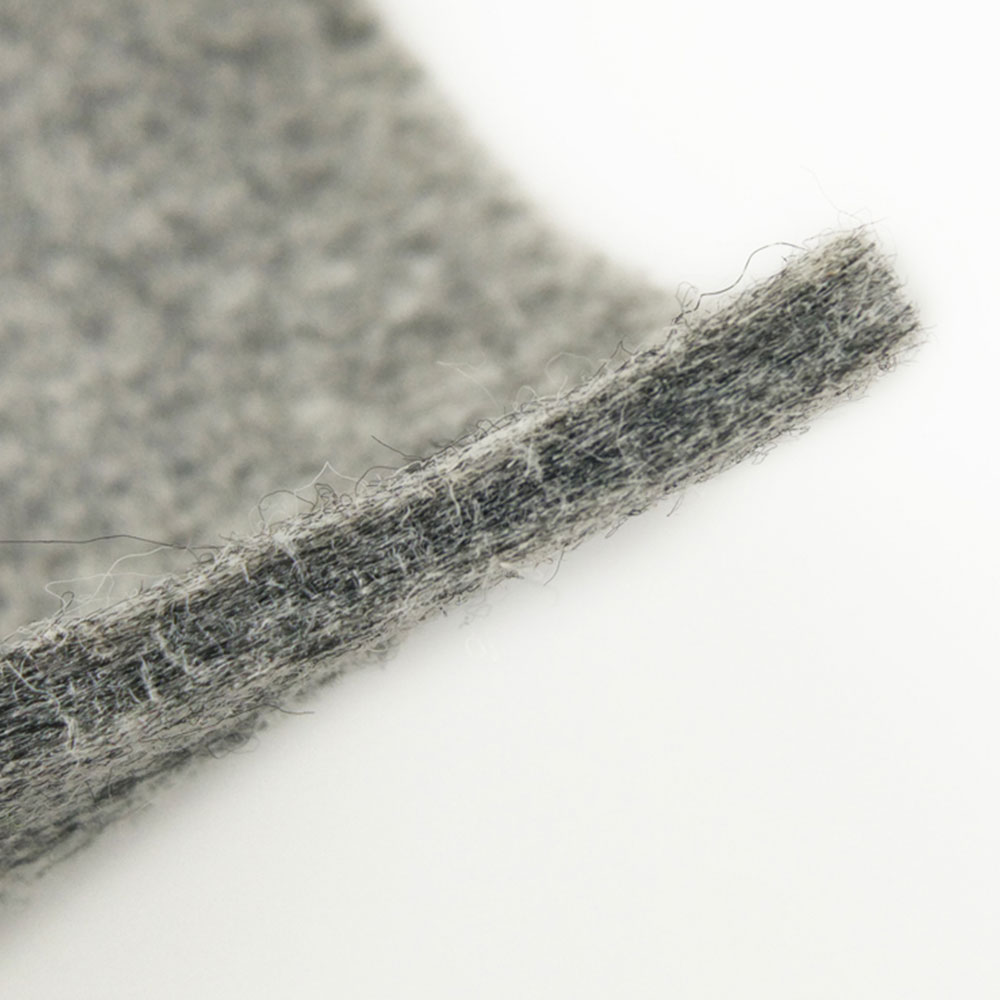
Evidence supports TPR as a non-staining material. Its latex-free and plasticizer-free composition prevents the sticky residue often left by degrading synthetic latex or PVC, ensuring the laminate wear layer remains intact. When evaluating a rug pad, you must verify that the product is 100% TPR. Some cheaper products blend TPR with PVC to cut costs, which reintroduces the risk of plasticizer migration.
A simple way to check for pure TPR is the smell test. PVC and cheap synthetic latex have a strong, distinct chemical odor when first unpackaged. High-quality TPR is virtually odorless. If your new rug pad smells like a shower curtain, it likely contains PVC and should not be placed on your laminate floor.
The primary drawback of solid TPR is its impermeability. Solid TPR sheets block airflow, trapping moisture. Opting for perforated or grid-patterned TPR Rug Pads for Laminate allows critical airflow to mitigate humidity buildup. Even with a grid pattern, TPR does not breathe like felt or woven natural rubber.
If you use a solid TPR-backed rug, you must implement a maintenance routine. The lack of breathability means any moisture from mopping, spills, or ambient humidity will sit on the laminate joints. Over time, this causes the HDF core to swell. You must physically lift the rug to allow the floor to dry completely.
TPR absorbs impact and anchors rugs securely without adhering chemically to the floor's surface. It provides excellent slip resistance, though it offers less cushioning compared to thicker felt alternatives. For thin, flat-weave rugs or runners in high-traffic areas, grip is the most critical factor. TPR excels here, locking the rug to the floor and preventing dangerous slip-and-fall accidents.
However, if you want a plush, luxurious feel underfoot in a living room or bedroom, a thin TPR pad will not provide the necessary cushioning. In these scenarios, you need to look at hybrid options or accept the firmer feel of a low-profile pad.
Dark pad backings can bleed color onto light-colored laminate floors. To prevent dye transfer, always specify undyed or light-colored TPR backings for your Floor-Safe Anti-Slip Mats. Moisture and friction can cause the dyes used in black or dark brown rubber pads to transfer into the microscopic pores of the laminate wear layer.
This dye transfer is incredibly difficult to remove without damaging the floor's finish. Always opt for white, cream, or light grey backings when placing mats on light oak, maple, or whitewashed laminate designs.
TPR offers high grip and low cushion, while pure felt provides zero grip and high cushion. Pure felt is highly breathable but requires a non-slip backing to prevent slipping on slick laminate surfaces. If you place a 100% felt pad under a rug on a laminate floor, it will slide around like a hockey puck. Felt is excellent for protecting the floor from scratches and providing acoustic insulation, but it is dangerous in high-traffic areas without an anchoring mechanism.
Felt pads are best reserved for large, heavy area rugs that are anchored by heavy furniture, such as a large living room rug sitting under a sofa and coffee table. For runners, entryway mats, and kitchen rugs, TPR is the superior choice due to its grip.
Dual-surface pads combine felt and rubber for a hybrid solution, offering bulkiness and acoustic insulation. In contrast, TPR backing provides low-profile convenience and maximum grip for high-traffic areas. A dual-surface pad typically features a layer of dense felt bonded to a thin layer of natural rubber or TPR. You place the rubber side down against the laminate for grip, and the felt side up against the rug for cushioning.
These hybrid pads are excellent for living rooms and bedrooms, but they are often too thick for doorways. If you need a rug to clear a swinging door, a low-profile TPR pad is usually the only viable option.
Both TPR and felt pads prevent dirt and grit from grinding into the laminate wear layer. However, felt's dense structure traps grit more effectively within the pad, whereas TPR requires regular sweeping underneath to prevent micro-scratches. When sand or dirt gets under a solid TPR pad, it sits on the surface of the floor. As you walk on the rug, the TPR presses that grit into the laminate.
Felt, on the other hand, allows the grit to embed itself into the fibers of the pad, keeping it away from the floor's surface. This makes felt slightly better at preventing scratches in homes with pets or heavy foot traffic from the outdoors, provided the rug is anchored properly.
TPR is generally more affordable than 100% natural rubber. However, it may degrade faster under heavy UV exposure or extreme temperature fluctuations, requiring replacement sooner in demanding environments. If you have a room with massive floor-to-ceiling windows that let in hours of direct, intense sunlight, the UV rays can cause TPR to harden and lose its grip over several years.
Despite this, the initial cost savings make TPR an attractive option for most homeowners. You can outfit an entire house with TPR pads for a fraction of the cost of premium natural rubber or high-end dual-surface pads.
A key advantage of TPR is its durability in washing machines, making it ideal for washable rugs in high-traffic, spill-prone zones. Natural rubber can crumble when washed, whereas TPR holds up well if dried properly. Many modern washable rugs come with an integrated TPR backing. You can throw the entire rug into the washing machine, run it on a cold cycle, and hang it to dry.
You must never put a TPR-backed rug in the dryer on high heat. The heat will melt the thermoplastic, ruining the rug and potentially damaging your dryer. Always air dry or use a strict no-heat tumble setting.
TPR backings typically offer a low profile. This thin design is excellent for door clearance but provides minimal acoustic dampening or plushness compared to thicker felt options. If you live in a multi-story home or an apartment, acoustic dampening is often a priority. Footsteps on laminate floors are loud and echo easily.
A thin TPR pad will do very little to muffle the sound of hard-soled shoes or pet claws. If noise reduction is a primary goal, you will need to compromise on the low profile and select a thicker, denser pad material.
Thoroughly clean and completely dry the laminate floor before placing any rug pad. This prevents trapping existing moisture or cleaning chemical residues beneath the TPR backing. If you mop the floor with a chemical cleaner and immediately throw down a TPR pad while the floor is still damp, you trap those chemicals against the wear layer.
Sweep or vacuum the floor to remove all loose dirt and grit.
Mop the area using a manufacturer-approved laminate floor cleaner.
Wipe the floor completely dry with a clean microfiber cloth.
Wait an additional 30 minutes to ensure all residual moisture has evaporated before placing the pad.
Lift the TPR-backed rug every 2-4 weeks. This allows the laminate floor to breathe, evaporates any trapped ambient humidity, and lets you sweep away micro-grit that could cause scratches. This routine is non-negotiable if you want to maintain the pristine condition of your laminate flooring.
During this inspection, run your hand over the floor where the pad was sitting. If the floor feels damp, sticky, or unusually warm, you need to increase the frequency of your inspections or consider switching to a more breathable pad design.
Do not place any rug pad on freshly installed laminate for at least 2-4 weeks. This allows the flooring to acclimate and any installation adhesives to cure fully. Even floating laminate floors need time to settle into their new environment. Placing heavy rugs and non-breathable pads on the floor immediately after installation can restrict the natural expansion and contraction of the planks.
If your laminate was glued down (which is rare but still occurs in some commercial applications), the adhesives need time to off-gas. Covering the floor with a TPR pad traps those gases, which can interfere with the curing process and damage the finish.
Avoid TPR over radiant heating systems, as heat might soften the thermoplastic. In highly damp basements, breathable felt is mandatory to prevent moisture accumulation. Radiant floor heating systems cycle on and off, creating constant temperature fluctuations. This continuous direct heat can cause the TPR to soften, lose its structural integrity, and potentially stick to the floor.
For radiant heating, you must use pads specifically rated for high temperatures, usually made from specialized natural rubber or pure felt. Always consult the radiant heating manufacturer's guidelines before placing any rug or pad over the system.
TPR backing provides a chemically safe solution for laminate floors, avoiding the plasticizer migration and staining associated with PVC. However, active moisture management is required due to its non-breathable nature. Verify that the product is 100% latex-free TPR, undyed, and commit to a routine of regular lifting and cleaning.
Audit your current rug pads and immediately discard any that smell strongly of chemicals or feel sticky to the touch.
Check your specific laminate manufacturer's warranty guidelines regarding synthetic rubbers to ensure compliance.
Select a low-profile, high-quality TPR pad for dry, high-traffic areas requiring maximum grip.
Establish a calendar reminder to lift and sweep under your TPR-backed rugs every two to four weeks.
A: Yes, chemically. However, "waterproof" laminate only protects against top-down spills. Trapped condensation or moisture under a non-breathable TPR pad can still penetrate joints and damage the core or subfloor over time.
A: No. Unlike PVC or cheap synthetic latex, high-quality, latex-free TPR does not contain unstable plasticizers that break down, off-gas, and bond to the floor's wear layer.
A: Natural rubber is derived from tree sap, is highly breathable, and is eco-friendly. TPR is a synthetic thermoplastic that mimics rubber's grip but is generally cheaper, latex-free, and machine washable.
A: The TPR material itself is soft and non-abrasive. However, if grit or dirt gets trapped beneath the pad, foot traffic can cause micro-scratches. Regular sweeping under the pad mitigates this risk.
A: It is generally not recommended unless explicitly approved by both the flooring and rug pad manufacturers. Thermoplastics can soften or degrade under continuous direct heat, potentially altering their non-reactive properties.
A: It is best practice to lift the rug and pad every 2 to 4 weeks to allow the floor to breathe, dissipate trapped ambient humidity, and allow for routine cleaning of trapped micro-grit.