- All
- Product Name
- Product Keyword
- Product Model
- Product Summary
- Product Description
- Multi Field Search
 English
Views: 0 Author: Site Editor Publish Time: 2026-08-18 Origin: Site


Hardwood flooring represents a massive physical investment in any property. Protecting that finish requires careful consideration of every material placed over it. A hidden risk lies in chemically incompatible rug pads and backings. These materials can trigger severe finish damage and lead to extensive refinishing work. Property owners constantly face a functional dilemma. On one hand, lightweight rugs slide and curl at the edges, creating physical safety hazards. On the other hand, synthetic backings cause anxiety over potential chemical marring. While PVC is universally condemned for wood floors, the safety of Thermoplastic Rubber remains widely misunderstood. This article provides a technical breakdown of how synthetic rubber interacts with wood finishes. We examine its performance across multiple floor transitions. We also establish a strict evaluation checklist for choosing a safe, non-slip underlayment. Understanding these mechanics ensures you protect your floors while maintaining a safe environment.
Formulation Matters: High-quality TPR backing is generally safe for fully cured, polyurethane-finished hardwood floors, but low-grade TPR with volatile, unstable plasticizers can cause irreversible chemical marring.
Finish Compatibility is Critical: TPR reacts negatively with penetrating oils, hardwax oils, or newly refinished floors that are still undergoing the off-gassing and curing process.
Physical vs. Chemical Protection: While TPR provides excellent grip, prevents physical scratching, and stops edge-curling, its lack of breathability requires careful monitoring to prevent trapped moisture.
The Hybrid Standard: For maximum protection and cushioning, a hybrid Non-Scratch Carpet Underlay combining a needle-punched felt core with a high-grade TPR or natural rubber base offers the safest, most durable solution.
Thermoplastic Rubber is a synthetic copolymer engineered to blend the distinct properties of rubber and plastic. It retains the elasticity and high-grip coefficient associated with traditional rubber. It also offers the durability and melt-processability of plastic. This dual nature allows manufacturers to create a highly flexible, resilient material. It grips smooth surfaces effectively without degrading rapidly. Unlike rigid plastics, TPR conforms to the micro-textures of flooring. It provides exceptional slip resistance under heavy foot traffic. Flooring contractors often prefer it over older synthetic options because it maintains its structural integrity under compression. When you place heavy furniture on a rug, the backing must absorb that point load. TPR distributes the weight evenly, preventing the rug fibers from crushing against the hard subfloor.
The manufacturing process of TPR involves blending styrene block copolymers with various additives. This creates a matrix that behaves like rubber at room temperature but can be molded like plastic when heated. This specific thermal property is what gives TPR its name. It also explains why it performs so well in residential environments. The material does not vulcanize like natural rubber. It relies on physical cross-linking, which makes it highly stable under normal indoor conditions. You get the grip of rubber without the rapid oxidation and crumbling associated with natural latex products.
Plasticizers are chemical additives introduced into polymer backings to make them flexible and pliable. The safety of a rug backing depends entirely on the stability of these plasticizers. Premium TPR backing utilizes stable, non-migrating plasticizers. These compounds remain locked within the polymer matrix over time. They do not leach out when exposed to normal room temperatures or moderate foot traffic. Conversely, low-end materials rely on volatile plasticizers. These unstable chemicals easily migrate out of the backing. They leach into the floor finish, causing discoloration or sticky residues. This migration is a chemical reaction that permanently alters the cellular structure of the wood finish.
Understanding plasticizer migration requires looking at the molecular level. When a volatile plasticizer leaves the rug backing, it seeks a new host material. Polyurethane floor finishes often absorb these rogue chemicals. The finish softens, becomes tacky, and eventually bonds with the rug pad. When you try to lift the rug, the finish peels right off the wood. High-quality TPR formulations use high-molecular-weight plasticizers. These larger molecules are physically trapped inside the TPR matrix. They cannot easily escape, making them vastly safer for prolonged contact with sensitive floor finishes.
Thermoplastic Rubber and Polyvinyl Chloride (PVC) are fundamentally different materials. PVC is notorious in the flooring industry for chemical off-gassing. The aggressive plasticizers required to make PVC flexible react violently with polyurethane and oil finishes. They literally melt the topcoat of the wood. TPR is engineered as a far more stable alternative. It does not require the same aggressive, volatile chemicals to maintain its flexibility. This makes it a significantly safer choice for residential applications.
To understand the stark differences, we must look at how these materials behave on a job site. PVC pads often smell strongly of chemicals right out of the packaging. That smell is the sound of volatile organic compounds escaping into the air. TPR, when manufactured correctly, has almost no odor. It remains inert. When a flooring contractor finishes a custom stain and seal job, they will explicitly void the warranty if a PVC pad is used. They know the chemical damage is inevitable. TPR provides the necessary grip without the chemical hostility.
Feature | TPR Backing | PVC Backing |
|---|---|---|
Chemical Stability | High (Non-migrating plasticizers) | Low (Volatile plasticizers) |
Floor Finish Safety | Safe for cured polyurethane | High risk of melting/staining |
Odor / Off-gassing | Minimal to none | Strong chemical odor |
Environmental Impact | Recyclable, fewer toxic byproducts | Contains phthalates, hard to recycle |
Durability | Resists crumbling and drying out | Becomes brittle over time |
Quality synthetic rubber backing is engineered to transition seamlessly between diverse flooring types. Whether placed over hardwood, tile, laminate, or luxury vinyl plank, a stable polymer matrix maintains its grip. It does this without leaving sticky residues. This versatility makes it highly practical for open-concept spaces. A single large area rug might bridge different flooring materials in a modern home. The lack of chemical migration ensures surface discoloration remains a non-issue across these varied transitions.
Consider a hallway that transitions from solid oak to ceramic tile. A rug spanning this transition needs a backing that respects both surfaces. Tile grout lines can trap moisture, while oak requires breathability. TPR bridges this gap by providing enough rigidity to span the grout lines without sagging, while maintaining a safe, non-reactive contact point on the wood. It grips the slick tile just as effectively as the textured wood grain. This multi-surface capability reduces the need to buy different types of underlayment for every room in the house.
The interaction between a rug pad and a floor depends heavily on the specific finish applied to the wood. Fully cured polyurethane, both water-based and oil-based, creates a hard, durable shell. This shell is highly resistant to premium-grade synthetic rubbers. However, oil-based polyurethane remains slightly more sensitive to prolonged contact with synthetic materials compared to its water-based counterpart. Water-based polyurethanes cross-link rapidly and form a very tight molecular barrier. Oil-based polys take much longer to reach full hardness and can sometimes react with lower-grade rubbers if the room gets too hot.
Hardwax oils and penetrating oils present a different challenge. These finishes do not form a hard protective shell. Instead, they soak into the wood fibers. Placing synthetic backings over natural oil finishes carries a high risk of chemical reactions. The backing can soften or dull the finish, leaving permanent marks. In contrast, factory-finished engineered hardwood often features an aluminum oxide coating. This ultra-durable finish boasts exceptional compatibility with synthetic rubber. It resists chemical migration and physical wear effectively. Aluminum oxide is essentially microscopic glass suspended in the finish, making it nearly impervious to chemical leaching from rug pads.
Beyond chemical interactions, an underlayment must anchor the rug securely. Loose rugs allow abrasive grit and dirt to slide underneath. As foot traffic grinds this grit into the floor, it causes severe micro-scratching. A high-grip backing solves this problem by locking the rug in place. It also eliminates the tripping hazard of curling corners. Keeping the rug flat and secure against the floor surface is a primary safety requirement in any building code or residential safety guideline.
Grit Isolation: The backing acts as a physical barrier, stopping sand and silica from reaching the wood grain.
Impact Absorption: It cushions the blow from dropped objects, preventing dents in softer woods like pine or fir.
Friction Reduction: By stopping the rug from shifting, it prevents the abrasive backing of the rug itself from acting like sandpaper on the floor finish.
Edge Stabilization: It holds the perimeter of the rug down, preventing the corners from curling up and creating trip hazards.
Solid synthetic rubber backings are inherently non-porous. This lack of breathability requires careful management. Trapped ambient humidity, pet accidents, or liquid spills beneath a solid backed rug cannot evaporate. If left unaddressed, this trapped moisture penetrates the wood seams. This leads to wood cupping, mold growth, or a cloudy appearance in the finish. Regular inspection and lifting of the rug are necessary to allow the floor to breathe.
Moisture is the enemy of hardwood. When water gets trapped under a non-porous pad, it creates a micro-climate. The wood absorbs the moisture, expands, and pushes against the adjacent boards. This causes the edges to rise, a condition known as cupping. Furthermore, moisture trapped against polyurethane can cause a condition called blushing, where the finish turns milky white. To prevent this, you must lift the rug periodically, especially in humid climates or after cleaning the floors. Ensure the floor is 100% bone dry before laying the pad back down.
Natural rubber offers an eco-friendly profile and superior floor safety. Its grip is exceptional, keeping rugs firmly anchored. However, natural rubber degrades faster than synthetic alternatives. Under UV exposure and natural oxidation, it can dry out, become brittle, and crumble. Synthetic rubber provides greater stability and longevity. It resists the environmental degradation that plagues natural sap-based products. When natural rubber breaks down, it leaves a fine, sticky dust on the floor that requires heavy solvents to remove.
A 100% felt pad is the ultimate safe material for floor finishes. It contains no plasticizers and provides excellent breathability. However, felt has a critical failure point: zero grip. On high-traffic hardwood pathways, felt pads slide, bunch, and cause edge curling. They offer great cushioning but fail entirely at preventing slip hazards. If you place a felt pad under a small runner in a hallway, it becomes a dangerous skateboard. Felt is only appropriate for massive, heavy area rugs that are anchored by large pieces of furniture.
Latex-backed options provide moderate grip and breathability. They are safer than PVC but have distinct limitations. Latex breaks down relatively quickly, especially when exposed to cleaning chemicals or sunlight. As it degrades, it turns into a fine, abrasive dust that can scratch the floor. Synthetic rubber outperforms latex in both longevity and long-term finish safety. Latex also has a tendency to stick to floors if the room experiences high humidity swings.
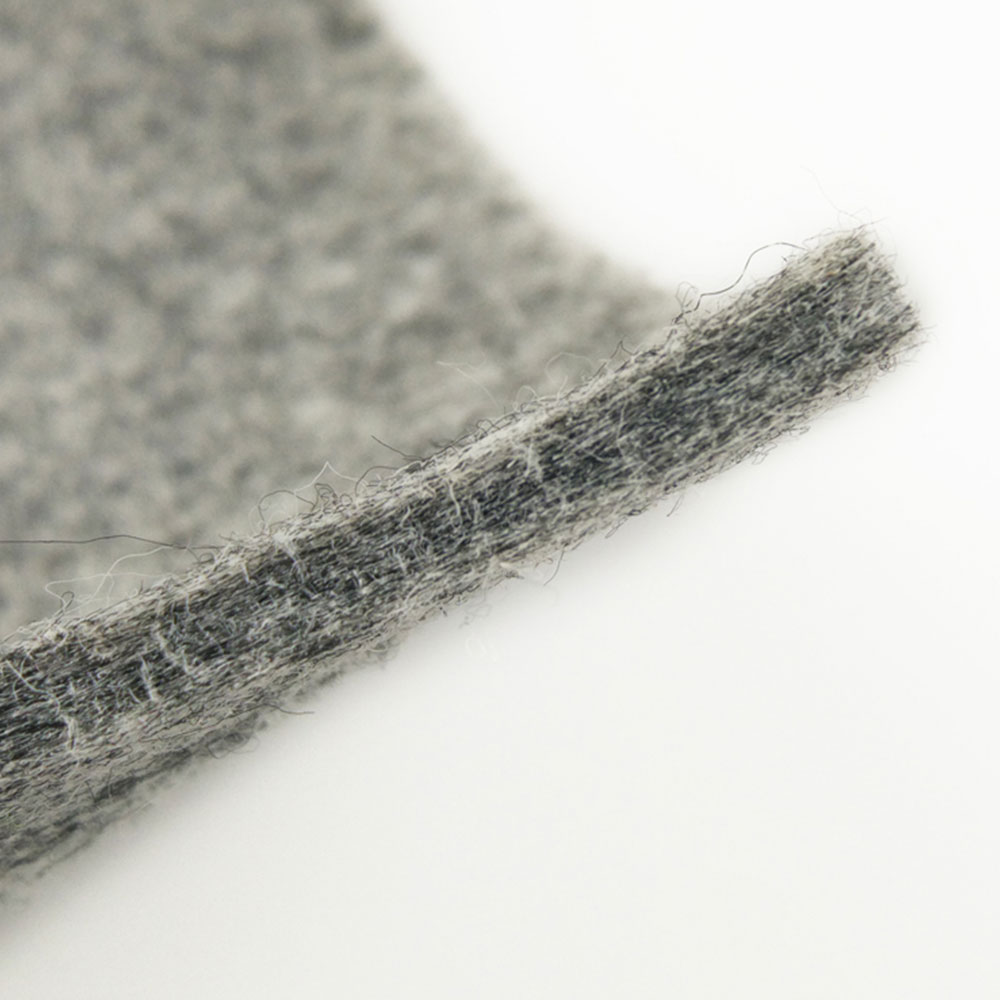
The industry-standard solution for premium floors is a hybrid pad. A Non-Scratch Carpet Underlay combines a needle-punched felt core with a high-grade rubber or synthetic base. This dual-surface construction places the felt side facing up to grip the rug backing. The rubber side faces down to safely grip the floor. A 1/4-inch to 3/8-inch thickness profile provides optimal acoustic insulation, physical protection, and structural integrity. This combination gives you the cushioning of felt and the safety of rubber without compromising the floor finish.
Material Type | Grip Level | Cushioning | Floor Safety Rating | Lifespan |
|---|---|---|---|---|
Pure TPR | Excellent | Low | High (if cured poly) | 10+ Years |
Natural Rubber | Excellent | Low | High | 3-5 Years |
100% Felt | Poor | Excellent | Highest | 15+ Years |
Hybrid (Felt + TPR) | Excellent | Excellent | High | 10+ Years |
Placing any non-porous backing on newly refinished floors is a severe risk. Polyurethane finishes require a standard 30-day curing process. During this time, the finish releases off-gassing solvents. Covering the floor prematurely traps these solvents. This ruins the finish and causes the backing to bond permanently to the wood. Always wait the full 30 days before laying down any rug or pad. Even if the floor feels dry to the touch after 24 hours, the chemical cross-linking process is still happening beneath the surface.
Contractors use moisture meters and cure tests to verify when a floor is ready. If you trap the off-gassing solvents, the finish remains soft. The weight of the rug presses the pad into this soft finish, creating a permanent imprint of the pad's texture in your floor. This is a catastrophic failure that requires completely re-sanding the floor down to bare wood. Do not rush the curing process. Leave the floors bare for a full month.
Direct sunlight and radiant underfloor heating accelerate chemical reactions. Heat causes plasticizer migration in low-quality synthetic rubbers. The backing softens, becomes sticky, and chemically bonds with the hardwood. If your space features large windows or heated floors, you must select premium, heat-stable TPR Rug Pads for Hardwood designed specifically to withstand elevated temperatures. Radiant heat systems can push floor surface temperatures up to 85 degrees Fahrenheit. At this temperature, cheap backings literally melt.
UV exposure from large south-facing windows also degrades materials rapidly. The ultraviolet light breaks down the polymer chains in the backing. This causes it to become brittle and lose its grip. Premium pads contain UV inhibitors that slow down this degradation process. If you have a rug in a sunroom, you need to inspect the backing every six months to ensure it is not breaking down and sticking to the floor.
Purchasing unbranded, ultra-cheap rugs introduces massive risks. The chemical formulation of these products is unverified. They likely contain volatile compounds and cheap fillers that break down rapidly. The initial savings are quickly erased by the damage they inflict on premium flooring surfaces. Cheap manufacturers use clay fillers and low-grade oils to bulk up the rubber. These oils leach out almost immediately upon contact with a warm floor.
Backing failures carry severe consequences. When a pad bonds to the floor, removal often strips the finish. Property owners must hire professional flooring contractors to sand, strip, stain, and recoat the damaged sections. This process is disruptive, messy, and highly expensive. You have to move all your furniture out, deal with the dust, and stay off the floors for days. Investing in a verified, high-quality underlayment is a necessary insurance policy for your floors. Spending a little more on a premium pad saves thousands in repair costs.
Do not rely on vague marketing terms. Look for explicit product specifications. Verify that the manufacturer provides a "safe for polyurethane" guarantee. Check for VOC-free certifications and plasticizer stability ratings. Reputable manufacturers transparently disclose their material composition and testing standards. If a product simply says "non-slip" without specifying the material, avoid it. You need to know exactly what chemicals are touching your floor.
Thickness and density determine impact absorption. A pad must protect the floor from heavy furniture legs and high foot traffic. Establish a baseline requirement of at least 1/4-inch thickness for living areas. High-density construction prevents the pad from compressing completely under weight. This ensures a permanent protective barrier between the rug and the wood. A dense pad also extends the life of the rug itself by absorbing the friction of foot traffic.
Proper installation prevents damage. For hybrid pads, strictly follow the "felt-side up, rubber-side down" orientation rule. The felt grips the rough underside of the rug, preventing shifting. The rubber side provides a safe, non-slip grip against the hardwood. Reversing this orientation compromises both physical safety and chemical compatibility. Before placing the pad, sweep and vacuum the floor thoroughly. Any grit trapped under the pad will be ground into the finish.
Always test new materials before full deployment. Cut a small piece of the backing or pad. Place it in an inconspicuous area, such as inside a closet or under a heavy piece of stationary furniture. Leave it for two weeks. Check for any sticking, dulling, or residue. This simple patch test prevents catastrophic damage in high-visibility areas. It is a small step that provides massive peace of mind.
Identify your specific floor finish type before purchasing any rug pad.
Measure your rug dimensions accurately and trim the pad one inch shorter on all sides.
Conduct a two-week patch test in a closet to verify chemical compatibility.
Lift your rugs every few months to allow the floor to breathe and prevent moisture buildup.
A: High-quality formulations with stable plasticizers will not discolor fully cured polyurethane floors. However, cheap alternatives contain volatile plasticizers that migrate into the wood finish, causing permanent yellowing or sticky residues. Always verify the quality and chemical stability of the backing.
A: You must wait a minimum of 30 days. Polyurethane finishes require this time to fully cure and release off-gassing solvents. Placing a non-porous pad down too early traps these gases and ruins the new finish.
A: No. PVC relies on aggressive, toxic plasticizers that destroy wood finishes and off-gas heavily. Thermoplastic Rubber is a different polymer blend that is far more stable, environmentally friendly, and significantly safer for floor contact.
A: It depends on the quality. Heat accelerates plasticizer migration. Low-quality backings will melt or stick to the floor. You must use premium pads explicitly rated for thermal stability and radiant heat compatibility.
A: Engineered hardwood uses the same surface finishes as solid hardwood, often an aluminum oxide or polyurethane coating. The evaluation criteria are identical. High-quality synthetic rubber or hybrid felt-rubber pads are the safest choices.
A: Yes. Premium synthetic rubber offers excellent multi-surface versatility. It grips smooth surfaces like LVP, tile, and laminate securely without causing chemical reactions or leaving residues across different transitions.
A: Use a plastic scraper to gently remove bulk material. Apply a wood-safe, pH-neutral adhesive remover or mineral spirits to soften the remaining residue. Wipe clean with a microfiber cloth. Never use abrasive pads, as they will scratch the finish.