
- All
- Product Name
- Product Keyword
- Product Model
- Product Summary
- Product Description
- Multi Field Search
 English
Views: 0 Author: Site Editor Publish Time: 2026-08-02 Origin: Site


A migrating entryway rug is a persistent daily annoyance and a legitimate trip hazard for households, commercial entryways, and recreational vehicles. Most mats move due to a fundamental mismatch between the backing material and the flooring type beneath it. Whether you have hard surface floors or deep carpet pile, generic fixes often fail. They cannot withstand heavy foot traffic, high vibration, or shifting heavy loads. Finding a permanent fix requires understanding the mechanics of slippage. We will evaluate temporary DIY fixes and commercial retrofit solutions like specialized underlays. We will also explore the ultimate upgrade to purpose-built, high-traction options. By matching the right backing technology to your specific floor type, you can secure your entryway and eliminate daily adjustments.
Floor Type Dictates the Solution: Carpeted floors require mechanical grip (like specialized grippers or adhesive fleece underlays), while hard floors rely on friction and suction (like rubber/felt underlays).
Retrofit vs. Replace: While anti-slip underlays can salvage an existing door mat, upgrading to purpose-built Anti-Slip Door Mats is often more cost-effective and reliable long-term.
Material Matters: Avoid cheap PVC backings that harden over time; prioritize TPR Backed Entrance Mats or nitrile rubber for sustained, floor-safe grip.
Maintenance is Critical: Dust, moisture, and debris accumulation are the primary causes of friction failure; regular cleaning of both the floor and the mat backing is required to maintain stability.
Hardwood, tile, laminate, and vinyl floors rely entirely on surface friction to keep a mat stationary. Dust, moisture, and microscopic debris act like tiny ball bearings between the mat and the floor. This severely reduces the coefficient of friction. When surface contact drops, even a slight nudge from a shoe will send the mat sliding across the room. Floor finishes also play a role. High-gloss polyurethane on hardwood creates a slick surface that repels standard rubber backings. Without a specialized grip texture, the mat simply glides over the finish. Regular foot traffic pushes dirt under the edges, compounding the friction loss over time. You must maintain a clean contact patch to have any hope of stability.
Placing a mat over wall-to-wall carpeting introduces a different mechanical problem. Carpets have a directional pile. When you step on the mat, your weight compresses the carpet fibers beneath it. As the fibers spring back, they actively push the mat in the direction of the pile lean. This acts like a slow conveyor belt, causing the mat to creep across the floor. The thicker the carpet pile, the more pronounced this effect becomes. Standard flat-backed mats have no way to resist this directional force. They float on top of the fibers, moving an inch or two with every footstep. Stopping this requires mechanical intervention, not just added weight.
Lightweight mats lack the necessary mass to maintain their position against lateral forces. Pivoting feet, dragging bags, strollers, and wheelchairs exert strong horizontal pressure. Shifting household items like bean bags or pet crates also contribute to this movement. Without sufficient weight or a high-friction backing, the mat will always yield to these dynamic forces. Commercial entryways see hundreds of lateral impacts daily. A person turning sharply on a mat transfers their entire body weight horizontally. If the mat's grip threshold is lower than that lateral force, it moves. Heavy-duty mats use dense rubber to increase their static load, making them harder to displace.
Many people reach for double-sided tape as a first line of defense. It offers an immediate, low-cost fix for a wandering mat. It provides highly effective short-term stabilization for events or temporary setups.
Leaves a sticky, stubborn residue on the floor.
Degrades quickly when exposed to tracked-in moisture.
Carries a high risk of damaging hardwood finishes or lifting floor varnish.
Can pull and fray carpet fibers upon removal.
Contractors often see the aftermath of carpet tape on hardwood floors. The adhesive chemically bonds with the polyurethane finish over time. When you finally pull the tape up, it takes the top layer of floor finish with it. This requires sanding and refinishing the affected area. On carpets, the adhesive binds to the yarn twists. Pulling it up causes permanent fuzzing and texture damage.
You can easily find rubber shelf liners at local hardware or bargain shops. This ultra-cheap DIY alternative is frequently used to stop slipping.
Lacks the density required to withstand heavy foot traffic.
Easily bunches up under the mat, creating a secondary trip hazard.
The thin material wears out and tears quickly under pressure.
Shelf liners are designed for static loads, like holding glasses in a cabinet. They are not engineered for dynamic shear forces caused by walking. Within a few weeks, the thin rubber grid tears apart. The pieces bunch up, creating lumps under your mat. This makes the mat look terrible and creates a new tripping hazard at your front door.
Some homeowners apply cured lines of 100% silicone to the back of their mats. Others use temporary vinegar and water cleaning sprays to increase surface tackiness. These methods aim to improve grip without buying new products.
Clean the back of the mat thoroughly.
Apply parallel lines of silicone caulk every three inches.
Allow the silicone to cure completely for 24 hours before placing it on the floor.
Results are highly inconsistent and rarely last. Silicone lines can peel off and transfer permanently to the floor. Vinegar and water sprays offer only temporary, marginal friction improvements. Sprays do absolutely nothing to address mechanical slip on carpets. The silicone method often ruins the mat backing and leaves rubbery streaks on your tile or wood.
Comparison of Mat Stabilization Methods | |||
Method | Best For | Durability | Risk of Floor Damage |
|---|---|---|---|
Double-Sided Tape | Short-term events | Low | High (Residue/Finish damage) |
Shelf Liners | Lightweight items | Low | Low |
Silicone Caulking | DIY experiments | Medium | Medium (Transfer risk) |
Premium Underlay | Existing mats | High | Low |
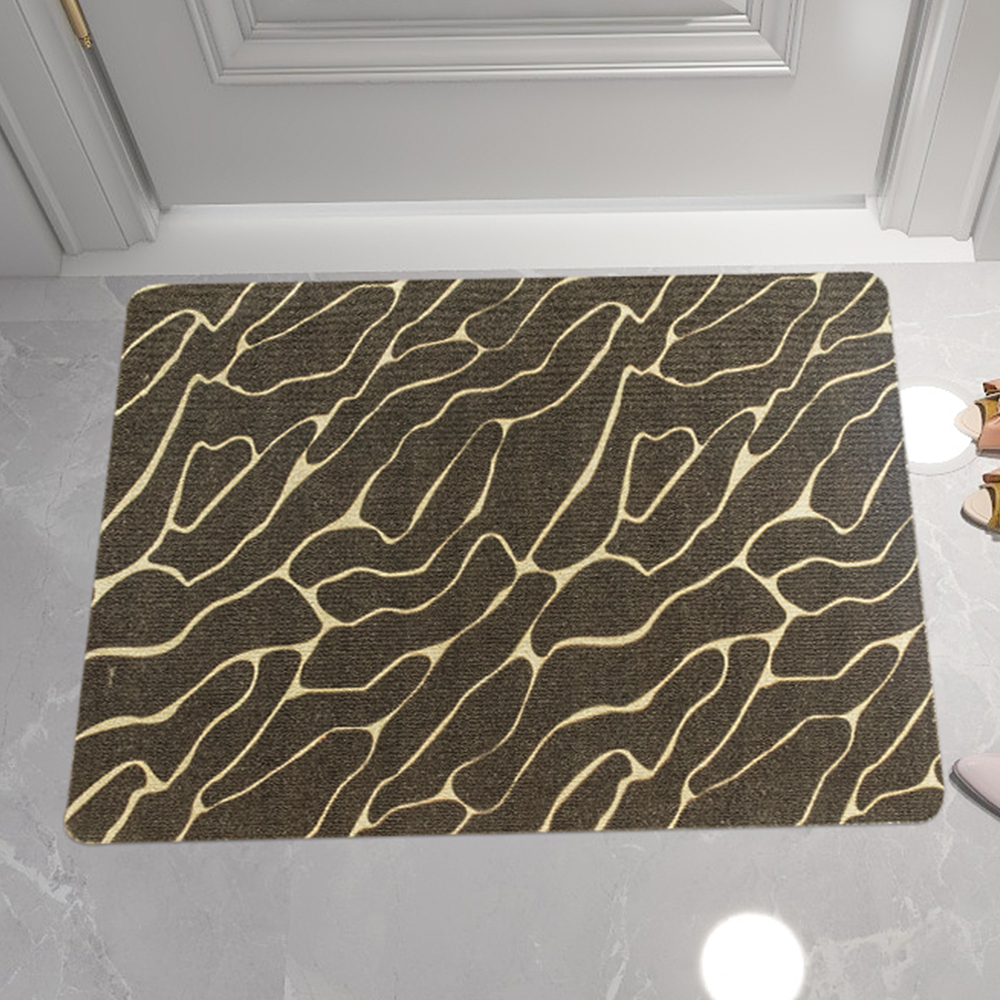
If you want to keep your current mat, a premium underlay is the best retrofit option. You must choose the right formulation based on your flooring. Hard floor underlays combine natural rubber and felt. This design maximizes surface area contact and prevents sliding without scratching delicate finishes. Carpet-on-carpet underlays use polyester fleece pre-impregnated with a dry adhesive. This allows the underlay to interlock with carpet fibers and prevent creep.
Always follow the industry-standard sizing rule for implementation. You must cut the underlay 5 to 8 centimeters smaller than the mat itself. This prevents the edges from lifting, curling, or showing around the perimeter. A properly sized underlay creates a slight taper at the edge of the mat. This taper allows foot traffic to transition smoothly onto the mat without catching the edge and flipping it over.
Velcro strips and anchor pins are best suited for placing mats over existing wall-to-wall carpeting. They provide a strong mechanical bond that resists the creep effect. You must assess the trade-off between stability and potential damage to the underlying carpet pile. Anchor pins can separate fibers and leave visible holes. Velcro requires a compatible loop-pile carpet to function effectively and can cause fraying over time.
When installing anchor pins, angle them slightly toward the center of the mat. This creates opposing tension that holds the mat flat. If you use Velcro, apply the hook side to the back of the mat. The hooks will grab the loops of your carpet. Never use Velcro on cut-pile or plush carpets, as it will shred the yarn twists and ruin the carpet's appearance.
Standard vinyl or unbacked coir mats inevitably fail to stay in place. They lack the structural integrity to grip the floor, especially in wet or high-traffic zones. Integrated backing technologies are designed specifically for high-traffic entryways to solve this exact problem. A heavy-duty backing provides the necessary mass to anchor the mat. It also provides a specialized texture that interacts with the floor surface to maximize friction.
Thermoplastic Rubber (TPR) combines the durability of plastic with the flexibility and high-friction grip of rubber. These mats provide exceptional stability on smooth surfaces. TPR resists extreme temperature changes. It will not crack in freezing winter conditions or melt during hot summer months. This scalability makes it ideal for both indoor entryways and exposed outdoor porches.
TPR is also lighter than traditional solid rubber, making the mats easier to lift for cleaning. Despite the lighter weight, the molecular structure of TPR provides a high coefficient of friction. It grips tile, wood, and concrete aggressively. When you wash a TPR mat, the material does not absorb water, allowing it to dry quickly and return to service faster than older rubber compounds.
Nitrile rubber stands as the commercial standard for mat backings. It is highly resistant to oils, lays perfectly flat, is fully washable, and offers maximum grip on hard floors. Nitrile does not suffer from memory effects. If you roll a nitrile mat for storage, it will lay completely flat the moment you unroll it.
PVC, or vinyl, presents significant conceptual trade-offs. It offers a cheaper upfront cost but is highly prone to curling at the edges. As the plasticizers evaporate over time, PVC hardens and completely loses its grip. A hardened PVC mat becomes a dangerous slip hazard on hard floors. The curled edges also create a severe tripping risk. Nitrile rubber avoids all these issues, maintaining its flexibility and grip for years.
Securing a mat over carpet is the most difficult residential scenario. Smooth backings will always slide due to the directional pile. We recommend mats with spiked or cleated rubber backings. These are specifically engineered to interlock with carpet fibers rather than floating on top. This mechanical connection stops the conveyor belt effect entirely.
The cleats must be long enough to penetrate the carpet pile but blunt enough not to damage the backing of the carpet itself. When placing a cleated mat, press down firmly across the entire surface. This forces the cleats into the pile, locking the mat in place. You will still need to lift and reposition the mat occasionally during deep cleaning, but it will not migrate under normal foot traffic.
You must prevent movement without causing chemical damage to the floor finish. Hardwoods and vinyl are particularly sensitive to certain materials. Warn against cheap rubber backings that cause plasticizer migration. This chemical reaction causes permanent yellowing or staining of vinyl and hardwood floors. Always recommend colorfast, floor-safe underlays or high-quality TPR backings.
Tile floors present a different challenge due to grout lines. A mat backing must be flexible enough to conform to the slight dips of the grout lines. If the backing is too rigid, it will bridge the grout lines, reducing the total surface contact area. This reduction in contact area lowers the friction and allows the mat to slide. Flexible nitrile or TPR backings conform to these surface variations, maintaining a solid grip.
Recreational vehicles present unique challenges. High vibrations, minimal door clearance, and moisture-heavy environments lead to standard mats sliding constantly on linoleum or vinyl surfaces. We recommend ultra-low-profile mats with durable TPR backings. These clear low-hanging doors easily and grip tightly to smooth recreational vehicle flooring, even under heavy engine vibration.
In a boat or RV, the floor is rarely perfectly level while in motion. The mat must rely entirely on its backing friction to stay in place. Heavy rubber mats are often too thick for RV doors. A thin, high-grip TPR mat provides the necessary stability without blocking the door swing. You must also ensure the mat backing is non-marking, as RV vinyl flooring is easily stained by cheap rubber compounds.
Identify your specific floor type to determine if you need friction-based or mechanical grip solutions.
Measure your entryway carefully before purchasing any underlay or replacement mat.
Purchase a high-quality, specialized anti-slip underlay cut to size if you wish to retain your current mat.
Upgrade directly to a TPR or nitrile-backed mat if your current one is lightweight, curling, or chemically degraded.
Establish a routine cleaning schedule for both the floor and the mat backing to maintain optimal friction.
A: Carpets have a directional pile. Foot traffic compresses these fibers, and as they spring back, they act like a conveyor belt. This actively pushes the mat in the direction the carpet pile leans.
A: No, it is generally unsafe for long-term use. Double-sided tape leaves stubborn adhesive residue, can damage the finish, and may cause permanent wood discoloration over time.
A: TPR stands for Thermoplastic Rubber. It combines plastic's durability with rubber's flexibility. These mats offer superior grip, resist temperature extremes, and will not crack or melt easily.
A: You should cut the underlay 5 to 8 centimeters smaller than the mat. This prevents the edges from lifting, curling, or becoming visible around the perimeter.
A: Yes. Washing removes accumulated dust and restores surface friction. Use mild soap and water, and ensure the rubber backing is completely dry before placing it back on the floor.
A: Silicone grips often fail outdoors. Moisture and severe temperature fluctuations degrade the silicone adhesion, causing it to peel away from the mat and lose its effectiveness.
A: You need thin, high-grip, low-profile underlays. These accommodate tight door clearances on vinyl flooring while resisting the high vibrations typical in recreational vehicles.