English

Views: 0 Author: Site Editor Publish Time: 2026-08-02 Origin: Site


A front door mat serves as the primary barrier against exterior debris and moisture, but selecting the incorrect size compromises both its functional efficacy and the entryway's architectural proportions. Consumers frequently purchase mats based on aesthetic appeal alone, resulting in the "postage stamp" effect. This means the mat is either too small to clean shoes effectively or looks entirely disproportionate to the space. Conversely, clearance failures occur when a mat is too thick or wide, causing door jams and dangerous tripping hazards.
This guide provides an evidence-based framework for calculating the exact dimensions required for your specific entryway. We evaluate standard versus wide entrance mats and help you mitigate common installation risks. By understanding the functional mechanics of entryway coverage, you can optimize both the cleanliness of your interior floors and the curb appeal of your property.
The 80% Rule: A properly sized door mat must cover a minimum of 80% of the active doorway's width to ensure adequate foot traffic coverage and correct visual proportion.
Standard Sizing Tiers: For a standard 36-inch single door, the optimal mat size falls into the "medium" category, typically measuring 18 x 30 inches, 22 x 36 inches, or 24 x 36 inches.
The Stride Requirement: Functional depth is as critical as width; a mat must accommodate at least two full steps (minimum 18-24 inches of depth) to effectively scrape debris.
Clearance Constraints: Mat thickness must be evaluated against the door's swing clearance to prevent threshold jamming and premature edge wear.
Indoor vs. Outdoor Scaling: Indoor entryway mats require slightly larger footprints (often 4.8 to 6 feet wide for double doors) compared to outdoor mats to catch residual moisture and align with interior wall structures.
Measuring the door frame rather than just the active door panel dictates the minimum acceptable width for any entryway mat. The 80% metric ensures that visitors cannot easily step around the mat when entering. If a mat covers less than 80% of the threshold, foot traffic naturally bypasses the scraping surface. This allows dirt and moisture to track directly onto interior flooring like engineered hardwood or luxury vinyl plank.
Visual psychology plays a significant role in entryway proportions. An undersized mat diminishes curb appeal by making the entrance appear cluttered or poorly planned. Architectural symmetry demands that the mat visually anchors the base of the door frame. When you apply the 80% rule, the mat aligns naturally with the exterior trim, creating a welcoming and structurally balanced appearance. On job sites, we always measure the exterior brickmould or casing to establish this baseline.
The biomechanics of entry require a mat to be deep enough for both the left and right foot to make contact before stepping inside. A shallow mat forces visitors to alter their natural stride or stop completely to wipe their shoes. Functional depth guarantees that passive scraping occurs simply by walking across the surface.
Standard 18-inch depths often fail to capture two full strides, especially for taller individuals. Optimal 24-inch to 36-inch depths provide superior performance in high-traffic or heavy-weather environments. Increasing the depth maximizes the surface area available for moisture absorption and heavy debris removal. This extended contact time protects sensitive interior flooring materials from abrasive grit.
Evaluating the gap between the threshold and the bottom of the door prevents operational failures. You must measure this clearance precisely before selecting a mat profile. Open the door halfway and use a rigid tape measure to determine the exact distance from the floor surface to the door sweep. This measurement dictates the maximum allowable thickness for your mat.
There is a direct correlation between mat size, material density, and overall thickness. Large coir mats often feature thicker profiles that excel at scraping but require substantial clearance. Conversely, low-profile rubber mats offer excellent durability while easily clearing tight door sweeps. Selecting the wrong thickness leads to threshold jamming, premature edge wear, and frustrating daily use.
Open the door to a 90-degree angle.
Place a tape measure on the floor directly under the door sweep.
Record the clearance at the hinge side, center, and latch side, as floors are rarely perfectly level.
Select a mat thickness at least 1/8-inch shorter than your lowest recorded measurement.
Standard single doors typically utilize small or medium sizing categories. The 18 x 30-inch dimension serves as the baseline industry standard for basic residential entries. However, this size often leaves noticeable gaps on either side of a standard 36-inch frame.
Upgrading to a transitional 22 x 36-inch or 24 x 36-inch mat ensures complete coverage of the door frame. This medium sizing tier aligns perfectly with the 80% rule while providing better depth for the two-step stride. A 36-inch wide mat matches the door width exactly, offering superior debris control and a more premium visual aesthetic.
Modern architecture frequently incorporates oversized or pivot doors measuring 42 to 48 inches wide. Standard mats look entirely out of place in these configurations. Optimal sizes for these wider entries include 24 x 48 inches or 30 x 48 inches.
Maintaining the 80% coverage rule for wider single doors requires specialized sizing without resorting to massive double-door mats. A 48-inch wide mat provides the necessary horizontal coverage to prevent dirt bypass. The increased depth of 24 to 30 inches maintains proportional balance against the larger door panel.
Entryways featuring sidelights require a different sizing approach. Optimal sizes range from 24 x 48 inches to 30 x 60 inches. In many cases, custom Wide Entrance Mats provide the best functional and visual solution.
You must size the mat to the total visual width of the door plus the sidelights. Centering a small mat strictly on the active door ignores the architectural symmetry of the wider frame. Extending the mat to cover the sidelight width visually anchors the entire entryway assembly and prevents the space from looking fragmented.
Grand entryways demand significant floor coverage. Optimal sizes for double doors include 24 x 60 inches, 30 x 72 inches, or 36 x 72 inches. These dimensions typically span 5 to 6 feet in total width.
It is necessary to cover both the active and inactive doors simultaneously. Using a single small mat in front of the active door causes asymmetrical wear and creates a visual bottleneck. Proper Wide Entrance Mats handle high traffic volumes and ensure that regardless of which door is opened, the interior remains protected.
Entryway Configuration | Door Width | Recommended Mat Size | Coverage Strategy |
|---|---|---|---|
Standard Single Door | 36 inches | 24 x 36 inches | Matches door width exactly for optimal scraping. |
Oversized Single Door | 42 - 48 inches | 24 x 48 inches | Maintains 80% rule without looking disproportionate. |
Single Door w/ Sidelights | 48 - 60+ inches | 30 x 60 inches | Covers total architectural frame width. |
Double Doors | 72 inches | 36 x 72 inches | Spans both active and inactive door panels. |
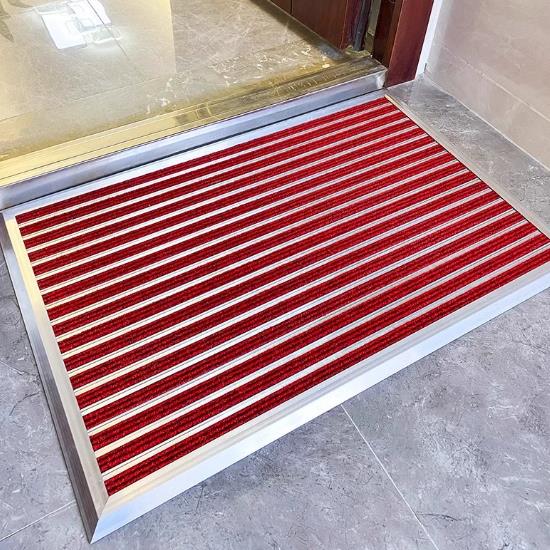
Outdoor mats focus heavily on structural containment and aggressive debris removal. They can be slightly narrower than their indoor counterparts, strictly adhering to the 80% door width rule. The primary goal of an exterior door mat is to knock off heavy mud, snow, and grit before it crosses the threshold.
Because outdoor mats face harsh elements, they must prioritize thickness and debris-trapping capabilities over expansive surface area. A highly textured, heavy-duty scraper mat confines dirt to a specific exterior zone. Keeping the outdoor footprint slightly more compact prevents the mat from extending into unprotected areas where heavy rain could overwhelm its drainage capacity.
Indoor entryways utilize a presentation width that often exceeds exterior dimensions. Indoor mats frequently need to span 4.8 to 6 feet in double doors or grand foyers. This larger scale visually anchors the interior space and defines the transition zone.
A larger surface area indoors is functionally necessary to absorb remaining moisture after the initial outdoor scrape. Walk-off runners provide the extended stride length required to dry footwear completely. Additionally, indoor rugs must account for low-clearance door sweeps and floor transitions. A wider, lower-profile indoor mat ensures smooth door operation over hardwood or tile surfaces.
Coir and natural fiber mats offer high scraping efficiency and a classic, traditional aesthetic. The stiff bristles effectively remove packed dirt from heavy boot treads. They are highly durable when placed in covered exterior locations.
However, coir has distinct sizing constraints. There is limited availability in extra-large sizes due to manufacturing limitations. Their thicker profiles frequently cause clearance issues under low-hanging doors. Furthermore, oversized coir mats are prone to excessive shedding if they extend beyond a covered porch area and face direct weather exposure.
Rubber and synthetic blends provide exceptional versatility. They are easily manufactured in wide entrance mat dimensions, making them ideal for double doors. The low-profile edges significantly reduce tripping risks while maintaining excellent water retention.
These materials are highly scalable for custom entryway sizes and handle extreme weather without degrading. The primary drawback is their utilitarian appearance. While highly functional, heavy-duty synthetic mats may not perfectly suit all residential architectural styles or delicate interior design themes.
You can bypass the size limitations of functional mats through a strategic layering approach. This involves placing a standard-sized, heavy-duty scraping mat directly over a larger, decorative outdoor rug. Layering provides the necessary functional scraping surface while achieving the desired visual scale.
Proper sizing ratios are critical for successful layering. A common configuration places an 18 x 30-inch functional mat over a 24 x 36-inch decorative base rug. For larger entries, a 24 x 36-inch scraping mat pairs well with a 36 x 60-inch base. This technique ensures the entryway meets the 80% width rule visually while maintaining aggressive dirt control.
Placing a standard 18 x 30-inch mat in front of a double door or oversized entryway creates the postage stamp error. The mat looks comically small compared to the surrounding architectural elements. This sizing failure immediately degrades the perceived value and curb appeal of the home.
Beyond aesthetics, this error results in a complete failure of dirt mitigation. Visitors naturally step around the undersized mat, tracking exterior debris directly inside. A mat that fails to cover the active walking path provides zero functional benefit to the property.
Oversized mats can create severe tripping hazards if they extend past a flat porch surface. When a large mat drapes over steps or uneven brickwork, the edges become unstable. Visitors stepping on an unsupported edge risk serious injury.
To mitigate this risk, you must measure the flat, usable surface of the landing. If the landing is shallow, size down the depth of the mat to ensure it rests entirely on a flat plane. Utilizing rigid-backed mats also prevents edges from curling or drooping over uneven threshold drop-offs.
Temperature fluctuations and heavy moisture cause certain materials to expand, contract, or curl at the edges. Rubber-backed mats can expand in extreme heat, while natural fibers may swell when saturated with water. Failing to account for this movement causes installation issues.
Leaving a 1-to-2-inch buffer between the mat edge and the door frame prevents jamming. If material expansion occurs, this buffer ensures the Front Door Mats do not wedge tightly against the threshold. Proper spacing guarantees the door can swing freely regardless of seasonal weather changes.
Measure your exact door frame width and apply the 80% rule to establish your minimum acceptable mat width.
Check the threshold clearance gap with a tape measure to ensure your selected mat thickness will not impede the door swing.
Evaluate the depth of your porch landing to guarantee the mat accommodates a two-step stride without hanging over uneven edges.
Select materials based on weather exposure; prioritize thick scrapers for covered outdoors and low-profile absorbents for indoors.
A: The industry standard for a basic 36-inch door is 18 x 30 inches. However, a transitional 22 x 36-inch or 24 x 36-inch size offers superior coverage and better aligns with the 80% width rule for standard residential entryways.
A: Measure the total architectural frame width, including any sidelights or inactive double doors. Apply the 80% rule to this total measurement to determine the minimum width required to maintain visual symmetry and functional dirt control.
A: Yes, mats can and should be wider if the entryway includes sidelights or architectural framing that extends beyond the active door. A wider mat visually anchors the space and captures debris from multiple angles of approach.
A: Mat thickness should be determined by your specific threshold clearance. Standard clearance metrics typically fall between 0.25 inches and 0.75 inches. Always measure the gap between the floor and the bottom of the open door before purchasing.
A: Double doors require a mat spanning 5 to 6 feet in width. A minimum width of 4.8 feet is necessary to adequately cover the span of two standard doors, preventing asymmetrical wear and visual bottlenecks.
A: Indoor mats often need to be larger than outdoor mats to catch residual moisture and align with interior wall structures. While they should visually complement the outdoor mat's proportions, functional walk-off length is the priority indoors.