
- All
- Product Name
- Product Keyword
- Product Model
- Product Summary
- Product Description
- Multi Field Search
 English
Views: 0 Author: Site Editor Publish Time: 2026-08-01 Origin: Site


Every time someone crosses your threshold, they bring a measurable amount of abrasive dirt, grit, and moisture directly onto your interior flooring. Over time, this daily influx degrades hardwood finishes, soils carpet fibers, and accelerates the wear and tear of expensive floor coverings. The core issue often stems from inadequate entrance protection. Homeowners and facility managers frequently misalign mat materials with their placement environments. This mismatch results in jammed doors, tripping hazards, trapped moisture, and ultimately, damaged floors.
Effective floor protection requires a "zone defense" strategy. Instead of focusing purely on aesthetics, you need a functional dirt-trapping system. This means evaluating mats based on door clearance, local climate, and specific material composition to determine exactly where they belong. By understanding the mechanical differences between scraping and absorbing materials, you can stop floor degradation at the source.
The Dual-Zone Consensus: Optimal floor protection requires a two-part system: an exterior mat for aggressive scraping and an interior mat for moisture absorption.
Material Dictates Placement: Using absorbent materials outside leads to rot and mold, while using abrasive scrapers inside fails to capture fine dust and moisture.
Clearance is Critical: Indoor placement is strictly governed by the door's sweep clearance; ignoring this metric results in damaged thresholds and jammed entryways.
Compliance & Context: Apartment dwellers must factor in shared-corridor fire codes and HOA regulations before placing mats externally.
The exterior placement zone serves as the first line of defense against floor damage. The primary goal here is dislodging heavy debris, mud, and snow from footwear before it ever reaches the threshold. To achieve this, the mat must feature high-friction, weather-resistant textures capable of aggressive scraping. A proper exterior mat physically breaks apart packed dirt from shoe treads. You need materials that will not compress under heavy foot traffic. Rigid fibers act like tiny brushes, digging into the grooves of boots and sneakers. Without this initial scraping action, large particles bypass the entry and act like sandpaper on your interior hard surfaces.
Once the heavy debris is removed, the interior placement zone takes over. The success criteria for interior placement involve capturing residual moisture and micro-particles like dust and pollen that bypass the exterior scraping zone. Interior textiles rely on capillary action to pull moisture away from footwear, drying shoes effectively before they step onto your primary flooring. This zone requires high surface area fibers. When wet shoes hit the interior mat, the fabric must instantly wick water downward into the base of the mat, keeping the top surface relatively dry for the next person entering the building.
Identifying the right mat involves checking specific physical features. Exterior mats typically feature open mesh or drainage backings, allowing water to pass through, while interior mats use solid vinyl or rubber to protect the floor beneath. Fiber stiffness is another indicator; stiff coir or plastic coils are meant for outside, whereas soft carpet fibers or microfiber belong inside. You can usually determine a mat's intended environment just by running your hand over the surface and inspecting the underside.
Feature | Outdoor Mat Indicator | Indoor Mat Indicator |
|---|---|---|
Backing Type | Open mesh, flow-through holes, or heavy unbacked rubber | Solid, non-permeable rubber or vinyl |
Fiber Texture | Rigid, abrasive, stiff (coir, extruded vinyl) | Soft, dense, absorbent (nylon, microfiber, cotton) |
Edge Profile | Thick, heavy, often un-beveled | Low-profile, beveled rubber edges to prevent tripping |
Primary Function | Scraping heavy mud, snow, and large debris | Absorbing water and trapping fine dust |
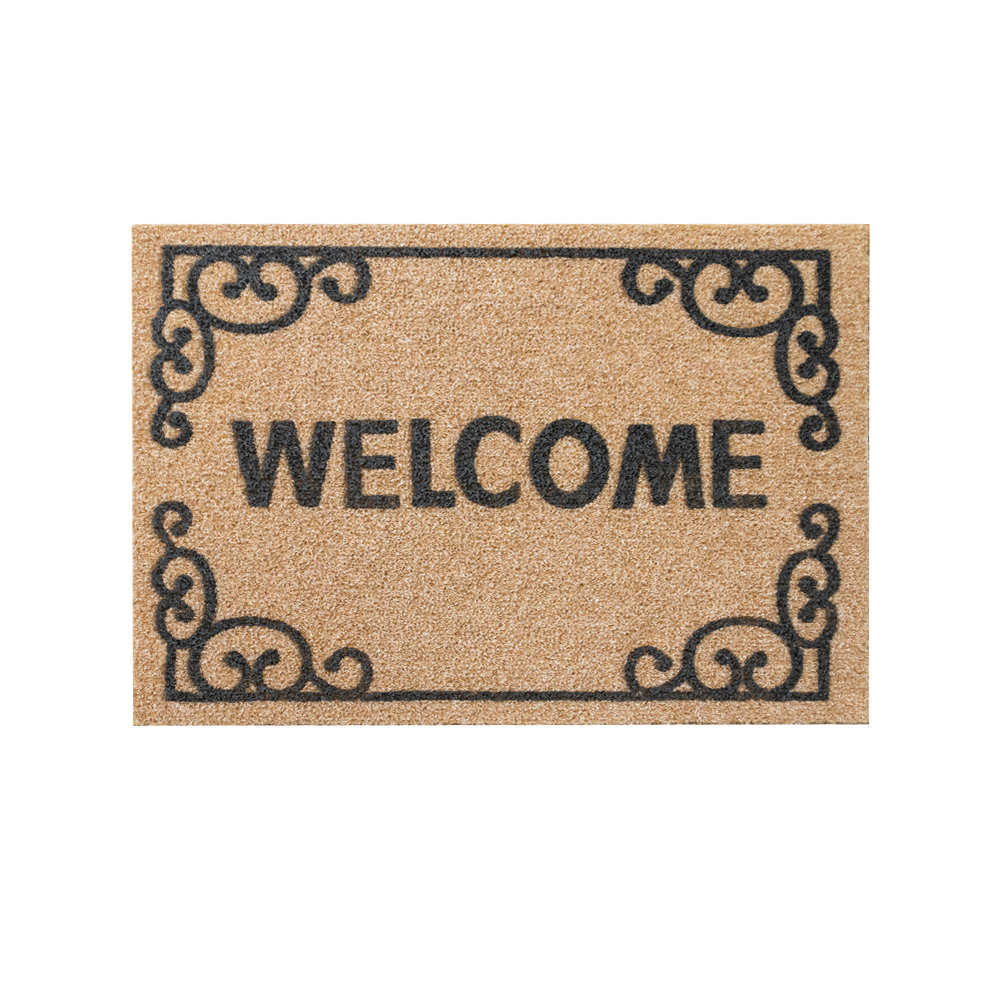
When selecting materials for exterior exposure, heavy-duty rubber, extruded vinyl, and natural coir are the standard options. Heavy-duty rubber withstands extreme temperatures without cracking. Extruded vinyl provides excellent scraping action and is easy to hose off. Natural coir offers aggressive scraping but tends to shed fibers over time, whereas synthetic scraping fibers maintain their structure longer under heavy foot traffic. You must match the material to your specific climate. If you live in an area with heavy snowfall, rubber mats with deep containment borders perform best. For dry, dusty environments, extruded vinyl loops trap loose dirt effectively.
Handling standing water is a critical function for any exterior mat. Designs with flow-through drainage holes prevent puddles from forming on the mat's surface, keeping the scraping elements effective. Solid-backed mats used outdoors can become waterlogged. UV resistance is equally important; mats exposed to direct sunlight require UV-stabilized materials to prevent degradation, fading, and cracking. If an outdoor mat lacks UV protection, the rubber or vinyl will become brittle and snap within a single summer season. Proper drainage ensures that freezing temperatures do not turn your entryway into a dangerous ice slick.
Using the wrong mat outdoors carries specific risks. Solid-backed mats can trap moisture against wooden decks or concrete porches, creating an environment for mold and mildew to thrive, which can permanently stain or rot the surface below. Additionally, mats placed in exposed entryways must have sufficient weight to mitigate wind displacement during storms. Lightweight mats easily blow away or fold over, creating immediate trip hazards.
Select a mat weighing at least 5 to 7 pounds for exposed, windy porches.
Ensure the mat has a flow-through backing if placed on natural wood decking.
Lift and sweep under the exterior mat bi-weekly to prevent organic buildup and deck staining.
Avoid placing solid rubber mats on painted concrete, as trapped moisture will cause the paint to peel.
Materials optimized for indoor use focus on absorption and fine dirt retention. Microfiber, cotton blends, and commercial-grade nylon excel in this environment. High-performance interior textiles are engineered with significant retention capacity, often capable of holding several gallons of water per square yard, ensuring that moisture does not track onto adjacent hard surfaces. Nylon is particularly effective because it resists crushing under heavy foot traffic while still offering excellent moisture wicking. Cotton is highly absorbent but takes longer to dry, making it better suited for low-traffic residential entryways rather than busy main doors.
The backing of an indoor mat determines its stability and safety. Nitrile rubber, PVC, and latex backings provide necessary hard-surface floor grip. However, chemical compatibility is a major factor. Certain rubber backings can cause plasticizer migration, leading to permanent yellowing or discoloration on luxury vinyl plank (LVP) and specific hardwood finishes. Always verify that the backing is safe for your specific floor type. Nitrile rubber is generally considered the safest and most durable option, as it resists curling and lays flat even after repeated washing.
Backing Material | Floor Compatibility | Durability & Grip |
|---|---|---|
Nitrile Rubber | Safe for most hard surfaces; check LVP manufacturer specs | Excellent grip, resists curling, machine washable |
PVC (Vinyl) | High risk of plasticizer migration on LVP and hardwood | Moderate grip, prone to cracking in cold temperatures |
Latex | Generally safe for tile; can stick to hardwood over time | Good initial grip, degrades and crumbles with age and washing |
Indoor placement is frequently constrained by door clearance. You must measure the gap between the floor and the bottom of the door sweep to ensure the mat will not catch when the door opens. For tight-clearance entryways, low-profile and ultra-thin mat options are necessary to maintain functionality without damaging the weatherstripping or jamming the door. Forcing a thick mat under a low door will quickly destroy the mat's edging and ruin the door's bottom seal.
Open your door halfway and place a straight edge or ruler flat on the floor beneath the door.
Measure the vertical distance from the floor to the lowest point of the door sweep or weatherstripping.
Subtract 1/8 inch from that measurement to account for floor variations and mat swelling when wet.
Purchase an indoor mat with a stated thickness (pile height plus backing) less than your final calculated number.
Relying on a single mat creates vulnerabilities in your floor protection strategy. Using only an outdoor mat means residual moisture and fine dust will inevitably track inside, dulling floor finishes. Conversely, using only an indoor mat leads to rapid saturation and heavy soil accumulation, overwhelming the mat's capacity and requiring constant cleaning. A single mat simply cannot perform aggressive scraping and high-capacity moisture absorption simultaneously. The physical properties required for each task are mutually exclusive. By splitting the duties, you ensure that neither mat is pushed beyond its functional limits.
Purchasing two specialized mats offers a strong long-term return on investment. The upfront cost of a dual-mat system is significantly lower than the expense of professional floor refinishing or deep carpet extraction. Furthermore, an exterior scraper actively extends the lifespan and reduces the washing intervals of the interior absorbent mat by handling the bulk of the dirt load. When you deploy a proper door mat system, you drastically reduce the daily sweeping and mopping required to maintain your entryways. The interior mat stays cleaner longer, which means it retains its aesthetic appeal and functional capacity for years rather than months.
Your home's exterior architecture dictates material requirements. If you have an exposed porch, heavy-duty rubber or extruded vinyl excels, as they handle direct rain and UV exposure. If your porch is covered by an awning, natural coir becomes a viable option, as it is protected from the rapid degradation caused by constant soaking. Covered porches allow for slightly more decorative exterior options, but you must still prioritize scraping functionality. For fully exposed areas, prioritize heavy, open-mesh designs that will not float away or become waterlogged during heavy downpours.
Apartment living introduces unique constraints regarding mat placement. Placing a mat outside the flat door in a shared corridor often conflicts with fire safety regulations regarding communal hallway obstructions. Building management policies may prohibit exterior mats to prevent trip hazards or facilitate cleaning. In these cases, keeping a high-quality mat strictly inside the flat is the only compliant option. When forced to rely solely on an interior mat, you must select a hybrid design that offers moderate scraping ridges alongside absorbent channels to compensate for the lack of an exterior scraper.
Secondary entrances often see higher volumes of industrial-grade dirt tracking, especially from garages or garden patios. These high-traffic areas require a robust placement strategy, often necessitating heavy-duty scraping mats immediately outside and highly absorbent Outdoor Welcome Mats or interior equivalents just inside the threshold to manage grease, mud, and grass clippings. Garage transitions are particularly problematic because they introduce automotive fluids and heavy particulate matter. A stiff bristle mat in the garage paired with a dark-colored, washable nylon mat inside the house provides the best defense against this specific type of grime.
Floor protection extends beyond the primary entrance. Secondary transition points greatly benefit from specialized Indoor Entrance Mats. Consider placing absorbent mats in mudrooms, at French door thresholds, on garage-to-kitchen transition steps, and in utility or laundry rooms to capture moisture and dirt before it spreads through the house. Any doorway leading to a hard-surface floor is a candidate for targeted mat placement. By intercepting dirt at these secondary choke points, you isolate messes to easily cleanable zones, preserving the finish on your primary living area floors.
The industry standard for optimal cleanliness requires utilizing both an outdoor scraping mat and an indoor absorbent mat. Base your final purchasing decisions on exterior weather exposure, interior door clearance height, and specific flooring chemistry to ensure backing compatibility. A well-planned entryway system stops damage before it starts.
Measure your interior door sweep clearance to determine the maximum allowable mat thickness.
Assess your exterior overhead coverage to decide between flow-through rubber or natural coir materials.
Check your interior flooring manufacturer guidelines regarding rubber or PVC backing compatibility.
Purchase a complementary pair of mats designed specifically for scraping outside and absorbing inside.
A: No. Indoor mats use absorbent fibers and solid backings that trap water. If used outside, they become waterlogged, take days to dry, and can promote mold growth on your porch or deck.
A: Choose a mat with a high-quality nitrile rubber backing, which provides excellent grip. Alternatively, use a dedicated non-slip rug pad designed specifically for hard surfaces to anchor the mat securely.
A: Heavy-duty rubber mats or extruded vinyl mats with flow-through drainage holes are best. They scrape heavy snow and mud while allowing water to drain away, preventing ice buildup.
A: Measure the gap between your floor and the door sweep. Most standard interior doors require a low-profile mat, typically between 1/4 inch and 3/8 inch thick, to ensure smooth clearance.
A: Usually, no. The hallway carpet acts as a preliminary scraper. Furthermore, many apartment buildings prohibit outside mats due to fire codes and trip hazards. Focus on a high-quality interior mat instead.
A: It can. Certain rubber and latex backings cause plasticizer migration, which permanently yellows vinyl and some hardwood finishes. Look for mats explicitly labeled as safe for LVP or use a colorfast rug pad.
A: Replace exterior scraping mats when the abrasive textures wear flat or crack. Replace interior absorbent mats when the fibers become permanently matted down or the backing begins to deteriorate and lose its grip.